DevOps Services. Reliable cloud delivery and operations.
Cloud infrastructure, delivery pipelines, monitoring and platform operations.

In numbers.
How it runs, step by step.
- Step 1
Audit what is running
We list the code repositories, cloud accounts, domains, secrets and backups, and record who has access to each.
- Step 2
Move ownership to your accounts
Anything held by a past contractor is transferred into accounts your business controls, with access limited to the people who need it.
- Step 3
Automate the release path
A pipeline builds, tests and deploys each change, with a staging environment to check it first and a quick rollback.
- Step 4
Add monitoring and alerts
Uptime checks, error tracking and logs are connected to alerts that reach the right person at the right time.
- Step 5
Write and test the runbooks
Backup restores, incident steps and access changes are documented and rehearsed so they do not depend on memory.
What it can look like. Screens from systems like this.
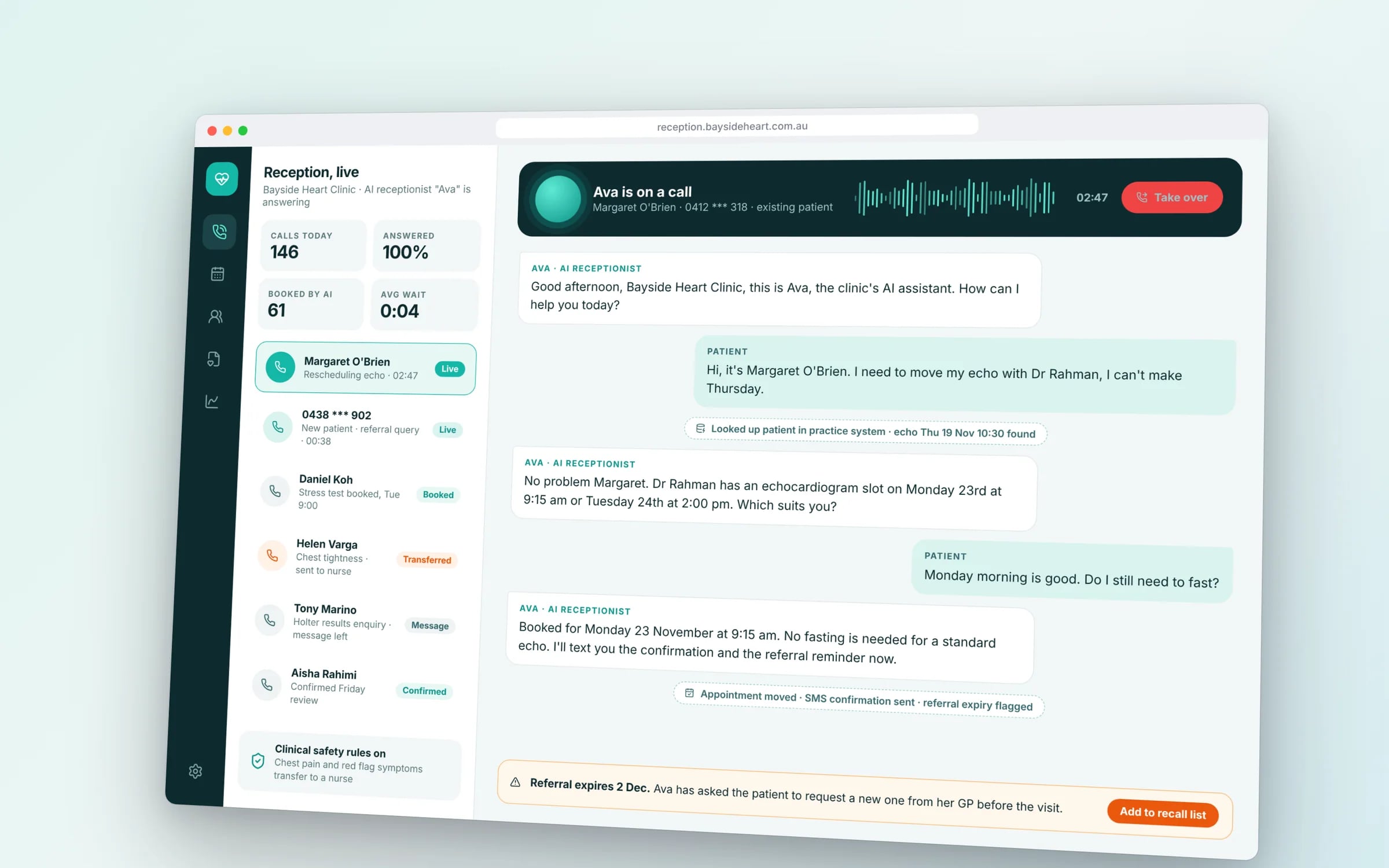
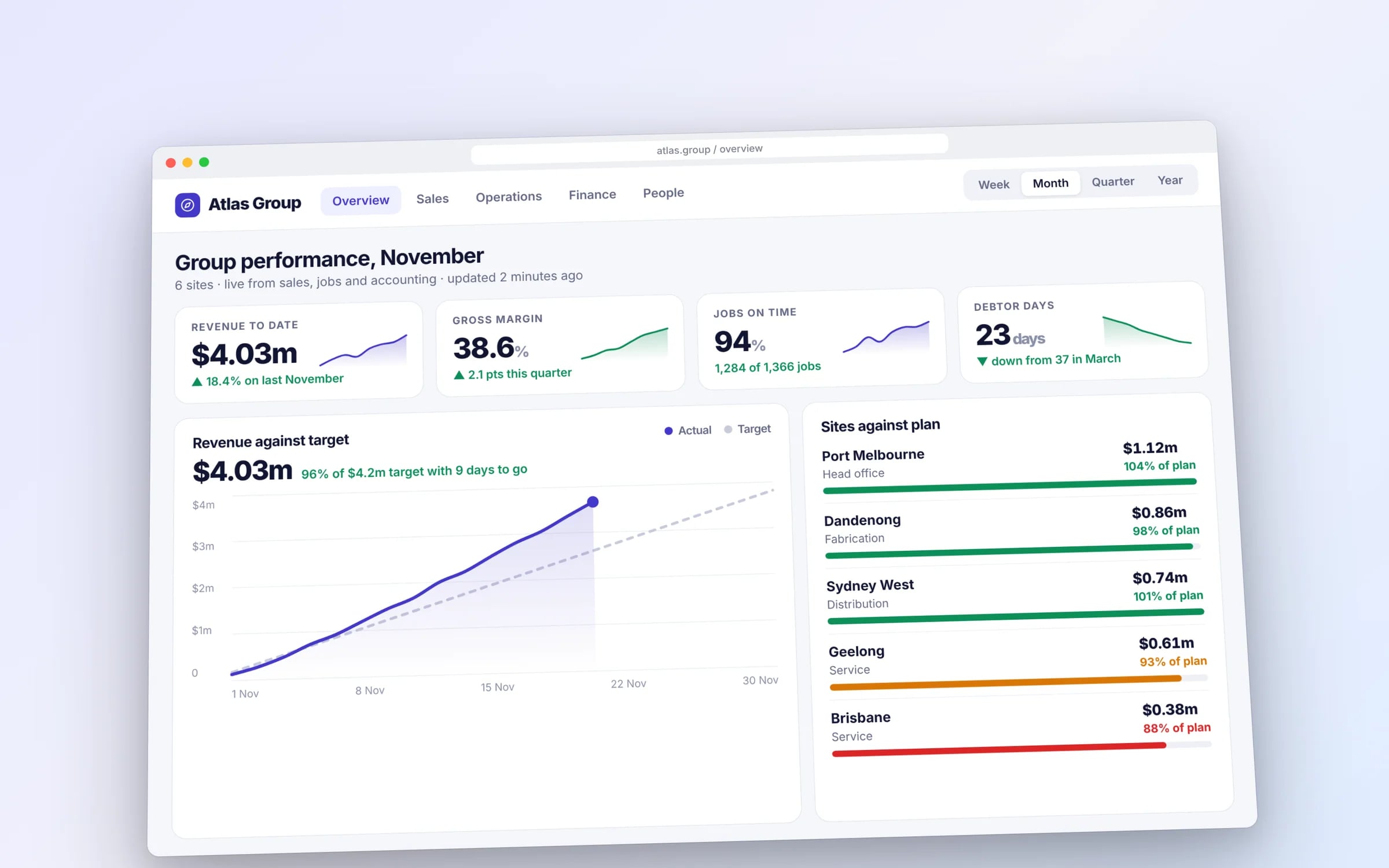
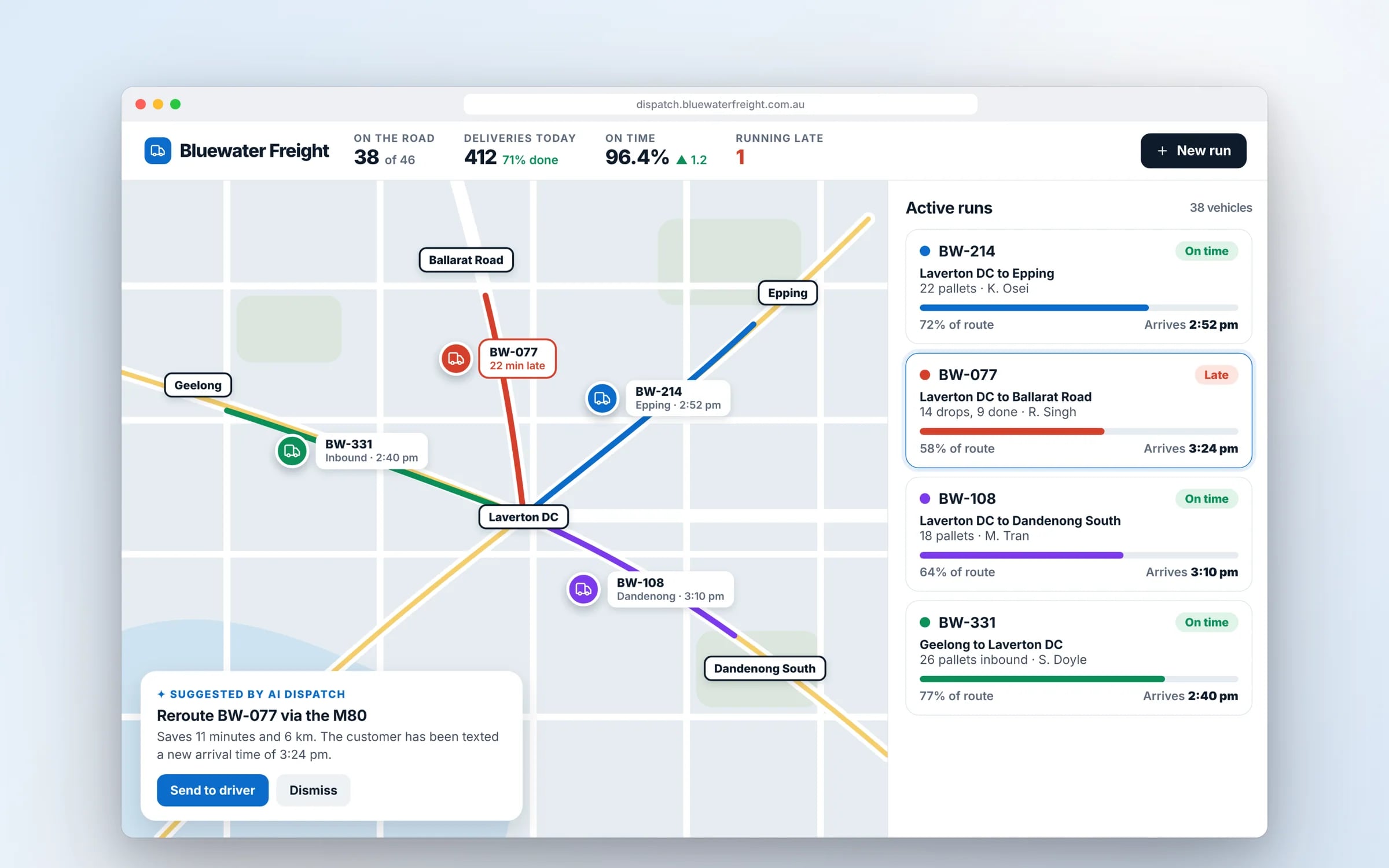

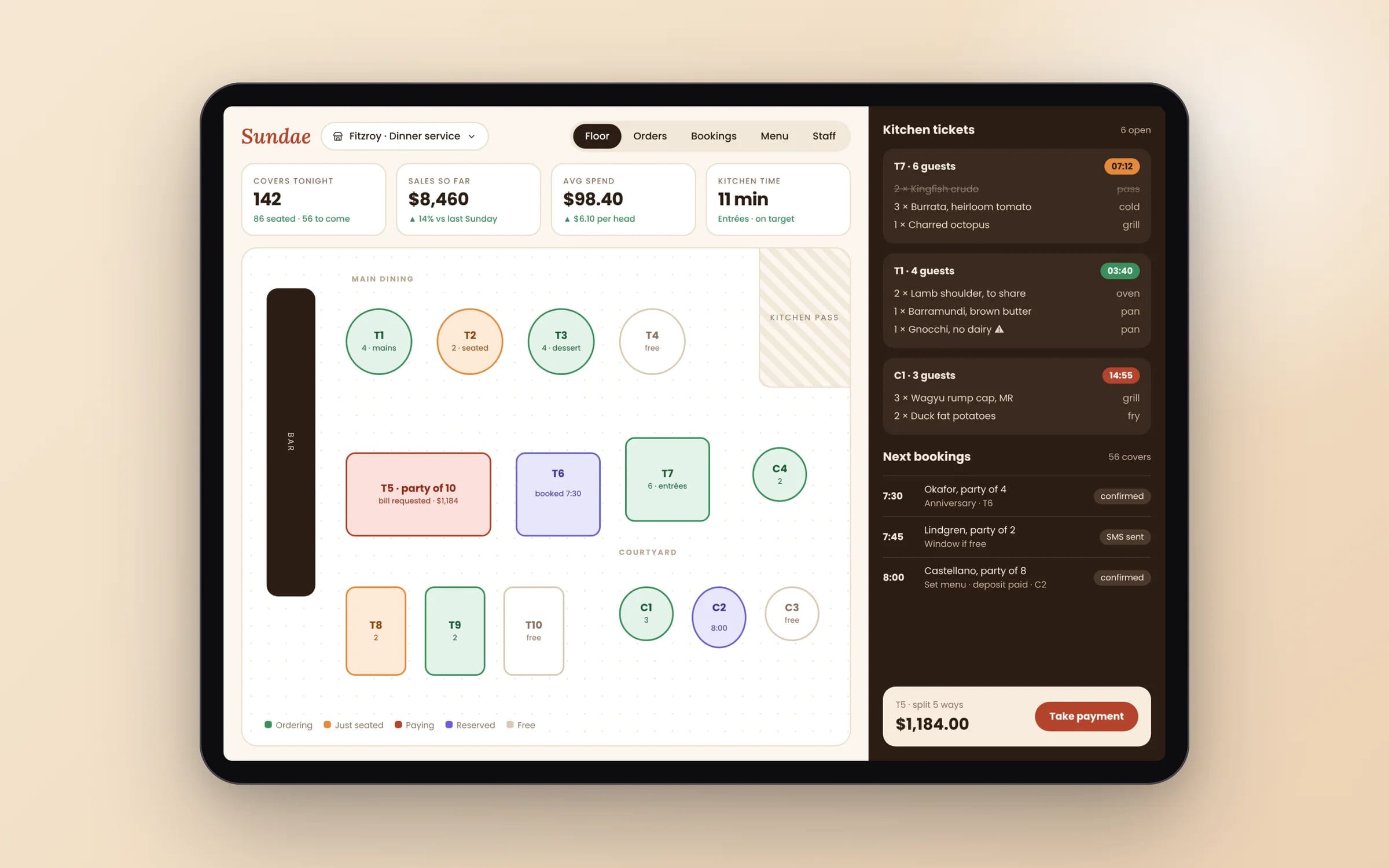
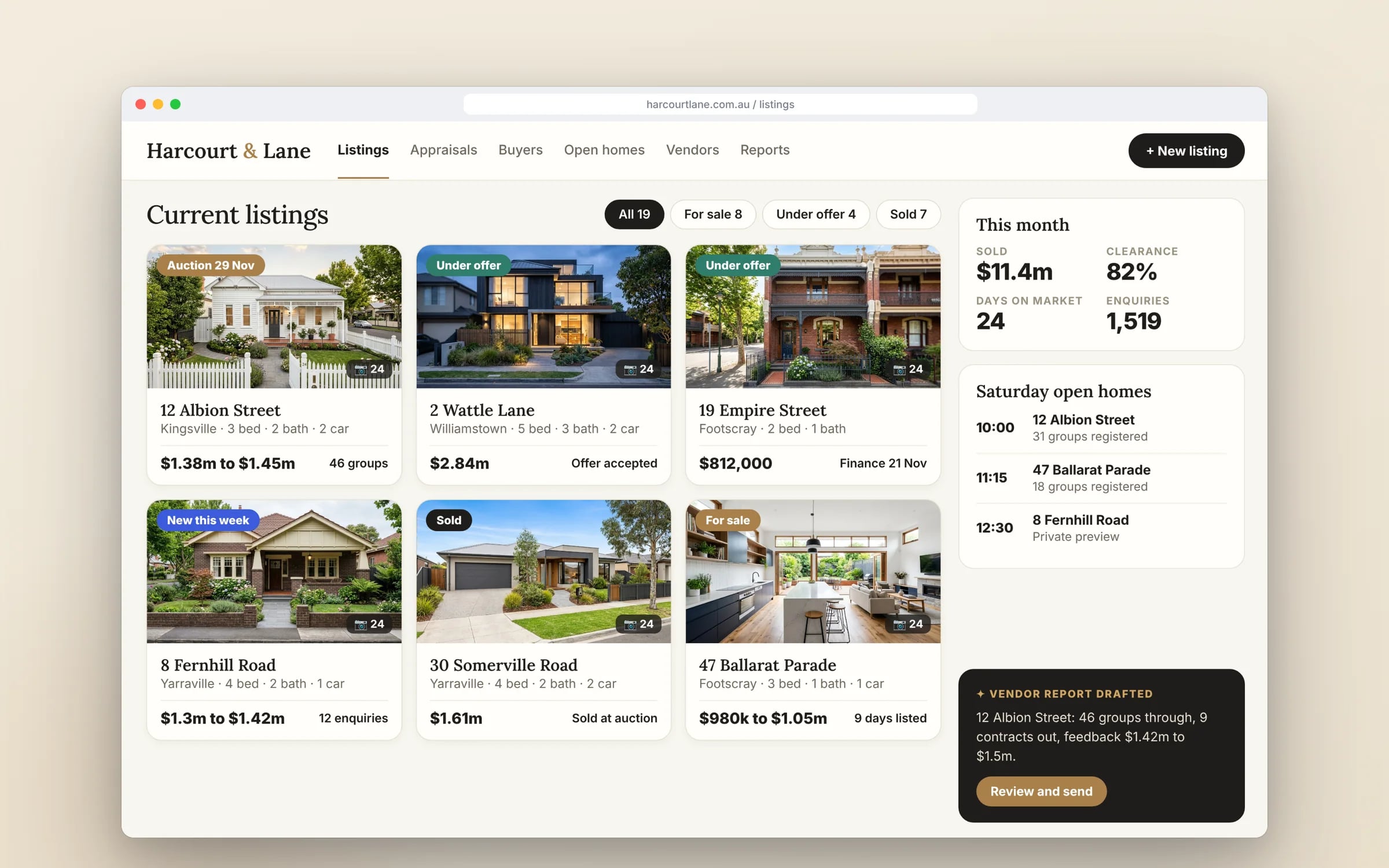
Example screens. The business names on them are invented.
★★★★★
“It has led to more sales because of how professional it is!”
Where the admin hours go. And what an agent takes off them.
- Re-keying invoices and bills9 h/wk
- Chasing quotes and follow-ups7 h/wk
- Copying job notes between apps6 h/wk
- Building the weekly report4 h/wk
Illustrative: a typical week for an office team of five. An agent drafts or does each of these; a person approves.
You probably need this when
- 01Releases happen late at night because something usually breaks.
- 02Only one developer knows how to deploy the system or where it is hosted.
- 03You find out the site is down when a customer calls.
- 04The hosting and domain accounts are in a former contractor's name.
- 05Nobody has ever tested restoring from a backup.
What you walk away with.
- 01Delivery pipelines
- 02Cloud infrastructure
- 03Monitoring
What is DevOps?
DevOps is the practice of automating how software is built, tested, released and watched in production, so updates go out often and safely without a late-night manual deploy.
For a growing business it means repeatable releases, monitoring that alerts someone before customers notice, backups that have been test restored, and infrastructure written as code in a cloud account you own.
Reviewed by the Hypex team, Port Melbourne
Questions owners ask.
What does DevOps mean for a small business?
For a small business, DevOps means the software you depend on is released, backed up and monitored by automated routines instead of one developer's memory. Every change is tested automatically before release, a failed release can be rolled back quickly, and an alert fires if the booking page or customer portal goes down. You do not need a DevOps team of your own. You need the pipelines, monitoring and runbooks set up properly once, documented, and owned by your business so any competent developer can pick them up.
What is a CI/CD pipeline?
A CI/CD pipeline is an automated sequence that takes a code change, builds it, runs the tests and releases it to your live system if everything passes. CI stands for continuous integration, where every change is checked against the rest of the code as soon as it is submitted. CD stands for continuous delivery or deployment, where passing changes are released through the same automated steps every time. The practical benefit is fewer broken releases and smaller, safer updates, because nothing reaches your customers without passing the same checks.
What is infrastructure as code, and why does it matter?
Infrastructure as code means your servers, databases, networks and permissions are defined in version-controlled files, using tools such as Terraform or AWS CloudFormation, instead of being clicked together in a web console. It matters because the whole environment can be rebuilt the same way after a failure, copied into a test environment, and reviewed like any other change. It also ends the situation where nobody knows why a server is set up the way it is. If you change developers, the files show exactly what exists and why.
How do we know our backups actually work?
You only know backups work when someone has restored from them and checked the result. Many businesses discover that backups were incomplete, or could not be restored, on the day they need them. A sound setup takes automated, encrypted backups of the database and files, keeps copies in a separate location, and runs scheduled restore tests into a separate environment. We document the restore steps in a runbook so recovery does not depend on one person, and we agree with you how much data you could afford to lose and how quickly you need to be running again.
Can you take over hosting and releases for software another developer built?
Yes, as long as we can get access to the source code and the cloud accounts it runs in. We start by auditing what exists: where the code lives, how it is deployed, what is monitored and what is undocumented. Then we move releases onto an automated pipeline, put the infrastructure into code where it is practical, and transfer anything held in a previous developer's personal accounts into accounts your business owns. From then on, any developer you choose can work from the same code, pipeline and documentation.
What moves the cost and the timeline.
After a 30-minute call you get a system map with a fixed price for each stage, before any work starts. These are the things that shape it.
- The state of the existing code, tests and documentation
- How many environments and services need to be managed
- Uptime or compliance requirements set by your customers or industry
- Whether infrastructure must be migrated between providers or accounts
Built for businesses like yours
Show us how you run it today.
Thirty minutes with the people who would build it. We'll map where the hours go and tell you honestly whether custom software is worth it for you.