Know what is on the shelf before the customer asks. And bill every pallet you touched.
For warehouses and 3PL providers holding stock for themselves or their clients.
Stock counts that disagree with the system, client orders arriving by email, and storage billing worked out in a spreadsheet at month end. We build warehouse systems that track every location and movement, take orders from your clients directly, and bill them for exactly what you did.
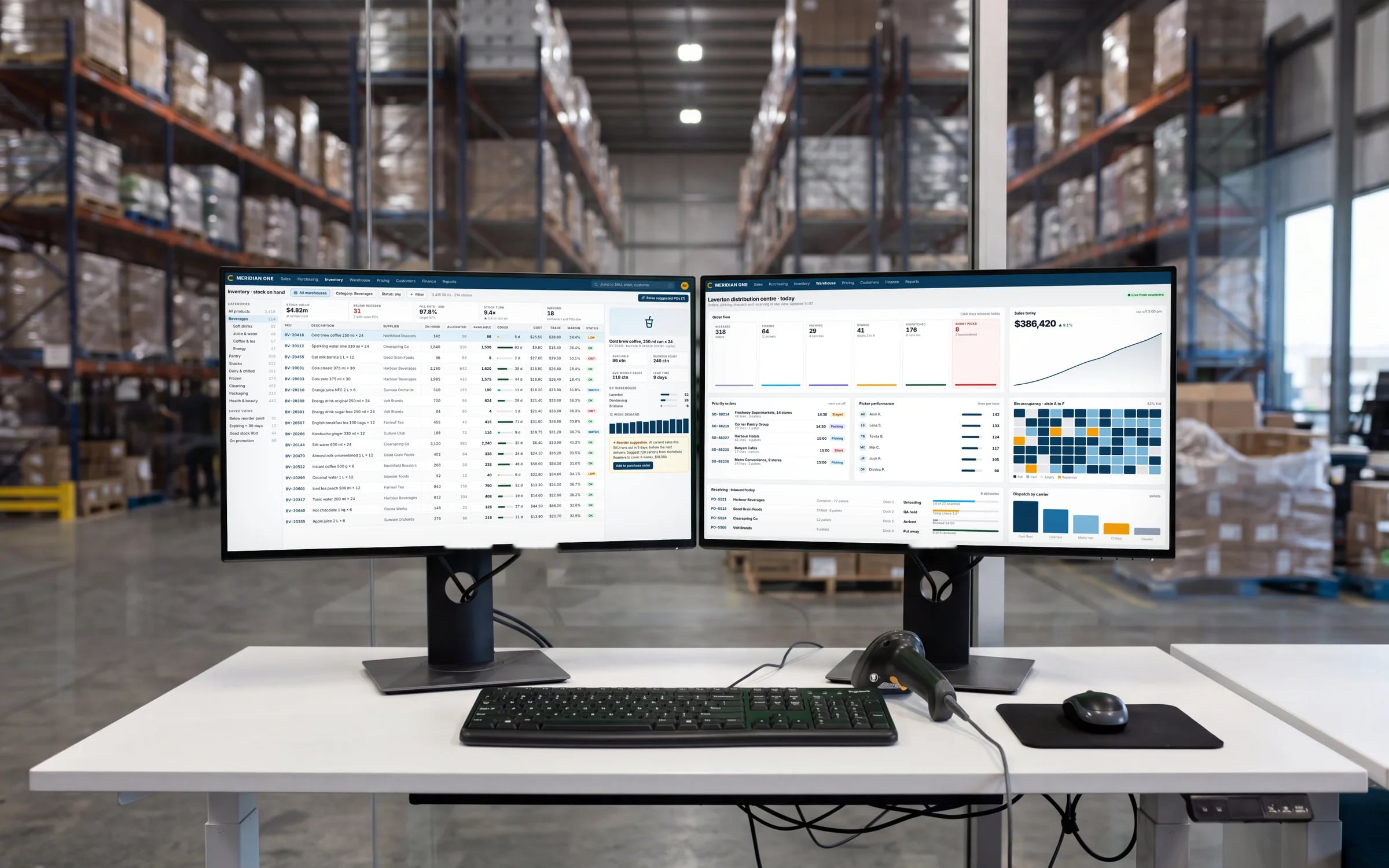
What you're probably running now. And what replaces it.
Today6 separate tools
- A basic WMS or spreadsheets
- Client orders by email and CSV
- Shopify or marketplace feeds
- Courier portals for labels
- Xero or MYOB
- Paper pick lists
With your own system
One login. One record of every job, customer and dollar.
- Locations & inventory
- Order intake
- Pick, pack & despatch
- Receiving
- 3PL billing
- Client portal
What we'd build for you. Pick the parts that hurt most first.
Nobody needs every module on day one. We usually start with the one costing you the most hours, ship it in weeks, and add the rest as it proves itself.
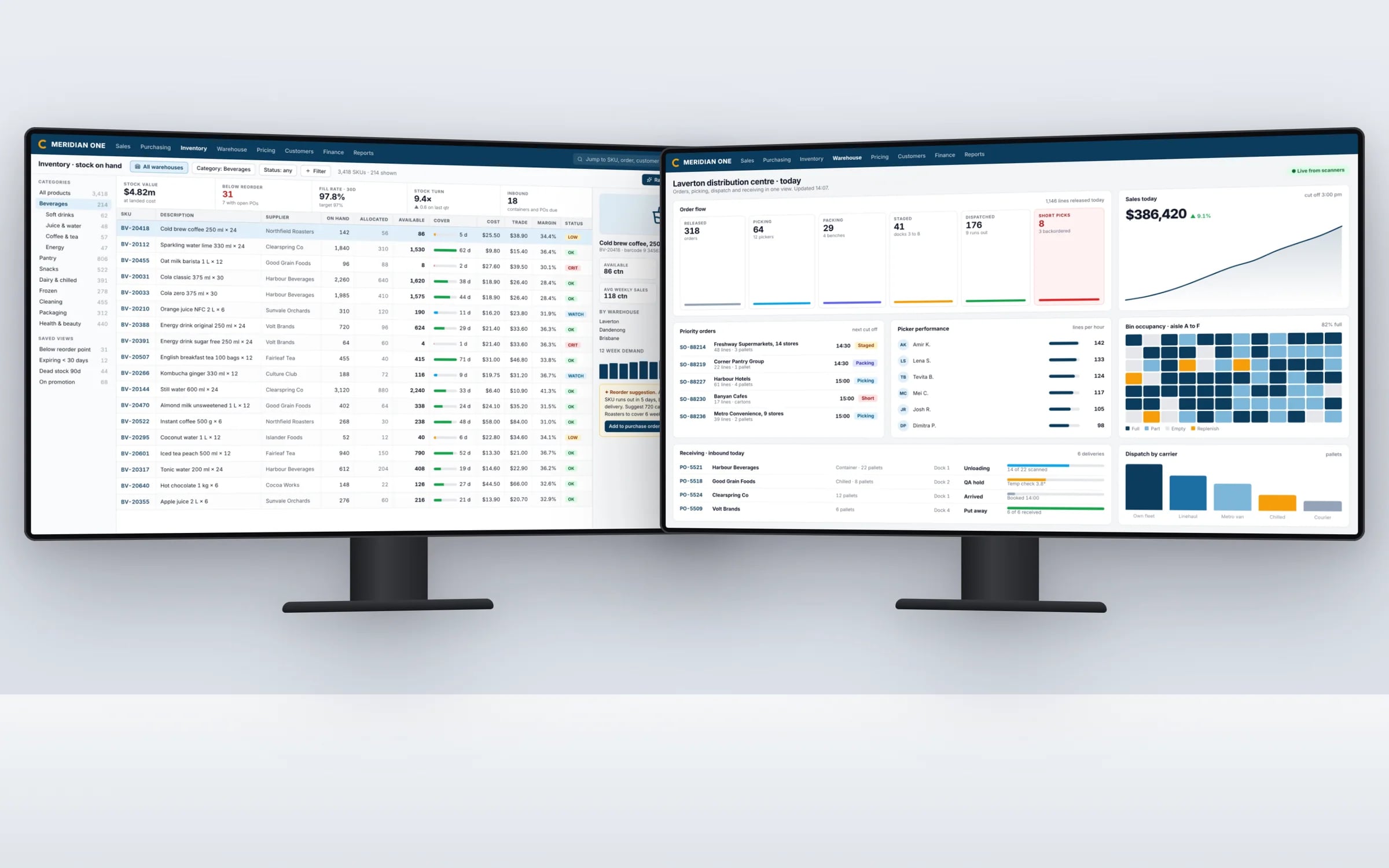
Locations & inventory
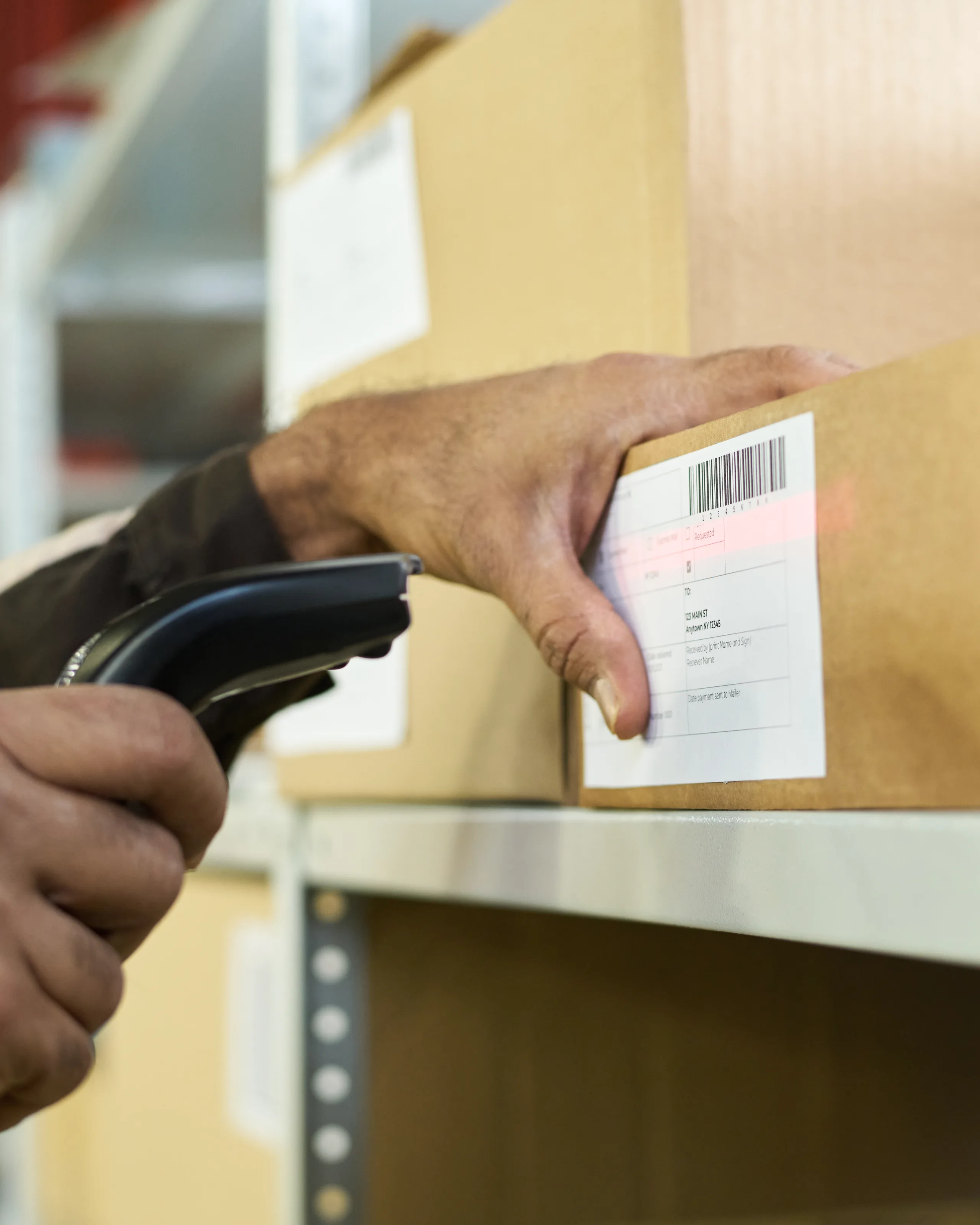
Every bin, pallet and batch, with lot, expiry and serial tracking where you need it.
Order intake
Orders from client stores, marketplaces, CSV, email and API into one queue.
Pick, pack & despatch
Wave and zone picking on scanners, packing checks and multi-carrier labels.
Receiving
ASNs, putaway rules and discrepancy reporting so inbound is right the first time.
3PL billing
Storage, handling and value-add charges counted automatically per client, per contract.
Client portal
Your clients see their stock, orders and tracking without calling you.
How it all connects. One core, and the tools you keep.
Your accounts, payroll and the other tools that work stay where they are. The system sits in the middle, so nobody types anything twice. Hover or tap a tool to see what moves across.
Parts of your system
- Locations & inventory
- Order intake
- Pick, pack & despatch
- Receiving
- 3PL billing
- Client portal
Running
Your system
Warehousing & 3PL
- Logins
- One
- Record of each job
- One
- Owner
- You
Your system → Shopify
A day in your business, rebuilt. Watch it run.
The same day you have now, with the system doing the chasing. Pick any moment to stop on it.
Order intake · now
Orders from four clients have landed overnight from their stores, CSVs and portal, all in one queue.
Illustrative. Based on how businesses like yours usually run.
★★★★★
“Great team to work with, really strive for success and provide excellent communication with any service provided.”
Where the hours go. What we hear from almost every business like yours.
- 01The system and the shelf disagreeStock is moved, shorted or damaged without a scan, and the next stocktake turns into a weekend.
- 02Client orders come in every formatOne sends a CSV, one emails a PDF, one has a Shopify store. Someone types all of it in.
- 03Storage and handling billing leaksPallet days, picks, kitting and re-labelling are counted by hand at month end, and a share of it never gets billed.
- 04Clients ring for stock levelsYour team spends hours answering 'how many do I have?' because clients can't see it themselves.
Every job on one board. From booked to invoiced.
Each delivery moves across the board as it happens: loaded, in transit, delivered. Proof of delivery lands with the job, and the invoice goes to Xero without anyone retyping it.
Five years of renting, against owning. The gap is what you keep.
The rules you work under. Built into the system, so the record keeps itself.
- Heavy Vehicle National Law: Chain of Responsibility (loaders and packers)
- Applies outside WA and the NT. The system records load weights and despatch details for each outbound consignment, so loading decisions can be shown later.
- WHS high risk work licences for forklift operation
- Each operator's licence and its expiry are stored, and the system flags anyone whose licence has lapsed or is due.
- Food Standards Code: Standard 3.2.2 (where you store food)
- Receiving and storage temperature checks are recorded against the stock and room they relate to, with out of range readings flagged.
- Fair Work modern awards and record keeping
- Shift start, finish and break times are kept as employee records and passed to payroll for the award that applies.
The numbers you’d see live
- Inventory accuracy from cycle counts
- Orders despatched on the day received
- Storage and handling charges billed per client
- Receiving discrepancies against ASNs
- Picks per labour hour
- Client portal queries against phone and email queries
Agents do the reading and typing. People keep the decisions.
The agents run inside your own system, on your data and your rules. They read, match and draft. Wherever money, safety or a customer is involved, a person signs off, and every action is logged.
Client order intake
TodayOrders arrive as CSVs, emails and portal uploads, and get cleaned up by hand.
With an agentNormalises every format into pick-ready orders and flags SKUs it can't match.
Where you come inUnmatched lines go to a short review list.
Storage and handling billing
TodayMonth end is a spreadsheet of pallet days, picks and extras per client.
With an agentBuilds each client's invoice from scans and movements, with the line-by-line evidence attached.
Where you come inYou approve the batch before it goes to Xero.
Stock questions
TodayClients email to ask what's on hand and when it ships.
With an agentAnswers from live stock and dispatch data in the client portal and by email.
Where you come inIt hands over anything it can't answer from the data.
What software does a warehousing and 3pl business need?
A warehouse or 3PL needs a warehouse management system that tracks every location and stock movement by scan, takes orders from each client's store or file in one queue, and counts storage and handling charges as the work happens.
A client portal and multi-carrier despatch finish it off. Hypex builds that system for the scanners you already run, alongside your current tools until the stock and the billing match.
Reviewed by the Hypex team, Port Melbourne
Warehousing & 3PL: questions owners ask.
What is a good WMS for a small 3PL in Australia?
A good WMS for a small 3PL is one that handles several clients' stock separately, takes orders in whatever format each client sends, and bills storage and handling per client without a month-end spreadsheet. Packaged options such as CartonCloud are built with 3PLs in mind and suit many operators. A custom WMS makes sense when your client contracts are unusual, when you do a lot of kitting or value-add work, or when you want to own the system outright. Either way, test it against your real billing rules before you commit, because that is where most 3PL software falls short.
How do I bill pallet days accurately?
You bill pallet days accurately by letting the system count how many pallets each client holds at a fixed time each day, from scanned receipts and despatches, and add those counts up over the billing period. That count needs to know about part pallets, pallet spaces versus pallets, and any minimum charges in the contract. Because every movement is scanned, the daily snapshot matches what is physically there, and clients can see the same numbers in their portal. Month-end billing then becomes a check of the totals rather than a rebuild from memory.
Should I do cycle counts or a full stocktake?
Most warehouses with scanned movements do better with regular cycle counts, checking a set of locations each day or week, than with one large stocktake a year. Cycle counting finds errors while they are still small and recent, so the cause is easier to trace. A WMS can pick which locations to count based on value, movement or recent discrepancies, push the count to a scanner, and post adjustments with a reason code once approved. Some clients or auditors still ask for a full count, and the same tools handle that, just across every location at once.
What is an ASN and why does a 3PL need one?
An ASN, or advance shipping notice, is a message from your client or their supplier telling you what is arriving, when, and in what quantities before the truck turns up. With an ASN in the system, receivers scan against an expected list, so shortages, overs and wrong items are caught at the dock instead of weeks later. Putaway can be planned in advance, and the client is told about discrepancies straight away. Clients can submit ASNs through a portal, a CSV upload or an API, depending on what they are able to send.
How does a WMS handle batch, lot and expiry tracking?
A WMS handles batch, lot and expiry tracking by recording those details at receiving and keeping them attached to the stock through every move, pick and despatch. Pick lists can then follow first expiry, first out for products where expiry matters, so older stock leaves first. If a client issues a recall, you can see which batches you hold, where they are, and which orders they went out on. This only works if receivers capture the details at the dock, so the scanner screens should make that quick and hard to skip.
Can a WMS keep cold chain temperature records?
Yes, a WMS can keep cold chain temperature records by attaching readings from your loggers or manual checks to the rooms, receipts and despatches they relate to. Receivers record the product temperature on arrival, the system flags readings outside the range you set, and the record stays with the stock. Where your temperature monitoring equipment can send data out, the readings can flow in automatically. When a client or auditor asks how a batch was kept, you can show its history instead of hunting through clipboards.
Can you build a warehouse management system for a 3PL?
Yes. We build WMS and 3PL platforms covering receiving, locations, picking, despatch, client portals and automatic storage and handling billing.
Can our clients' Shopify stores send orders straight in?
Yes. We connect to Shopify and other stores and marketplaces with public APIs, so orders arrive without anyone re-keying them.
Do we need new scanning hardware?
Usually not. We build for the Android scanners and phones you already have wherever possible.
You own it
The software and its source code belong to your business. No per-seat fees growing with every hire.
What owning meansFunding may help
Parts of some builds may qualify for the R&D Tax Incentive. We'll help you and your adviser work out which.
How the incentive worksKnow your numbers
Add up what your subscriptions, re-keying and workarounds cost you each year before you talk to anyone.
Open the calculatorWeighing up a packaged product?
Other industries we build for
Show us how you run it today.
Thirty minutes with the people who would build it. We'll map where the hours go and tell you honestly whether custom software is worth it for you.