How can a plumber or electrician quote faster?
You quote faster by building quotes from templates, your own labour rates and your supplier price files, so most of a quote is picked rather than typed. Common jobs become kits: a hot water replacement or a switchboard upgrade with the usual labour and materials already in it, adjusted per site. Photos and notes from the enquiry or site visit attach to the quote, and the client accepts online with a signature. Accepted quotes turn into jobs without being re-entered, and you can see which quotes are waiting for a follow-up call.
How do I track van stock across all my utes?
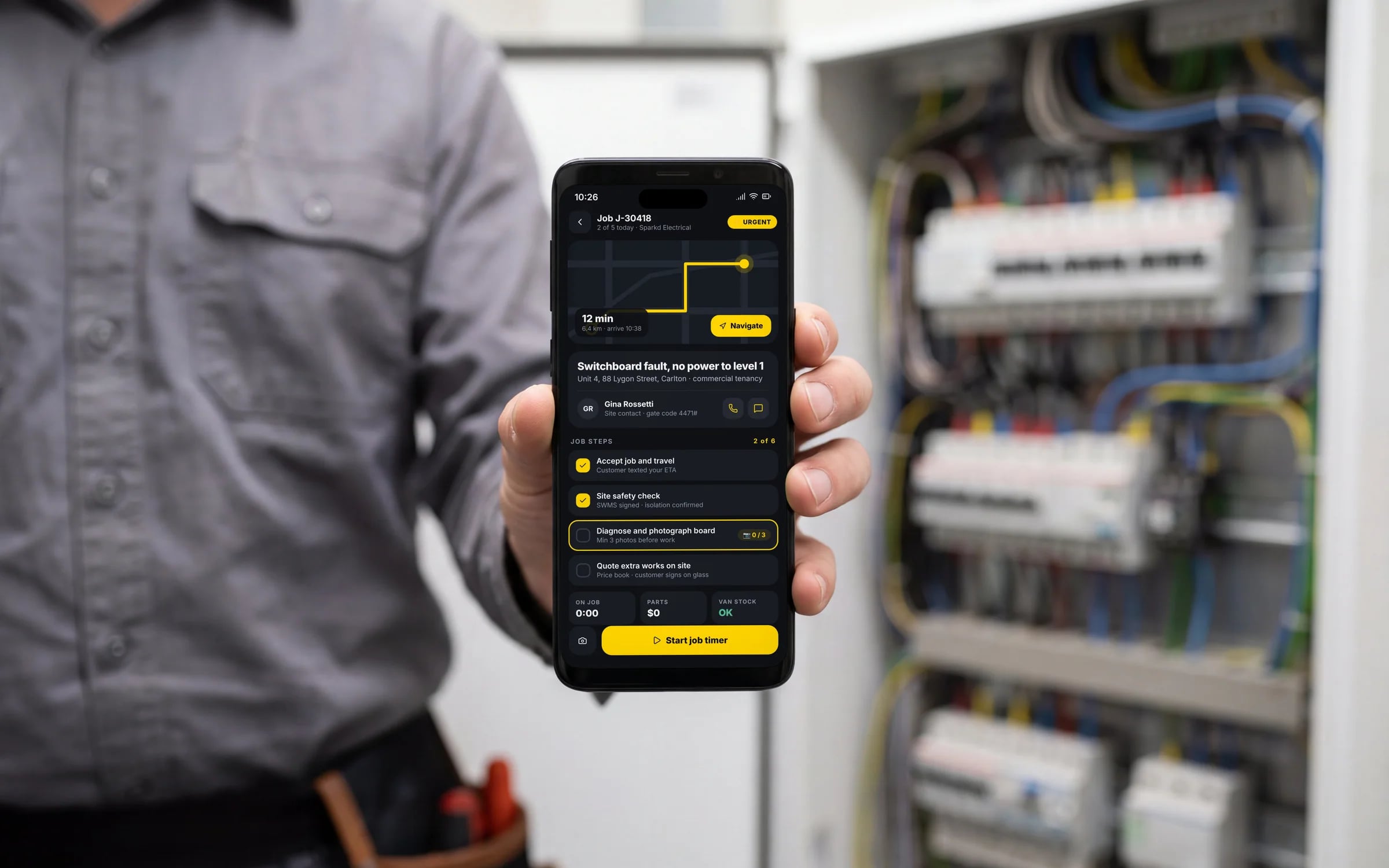
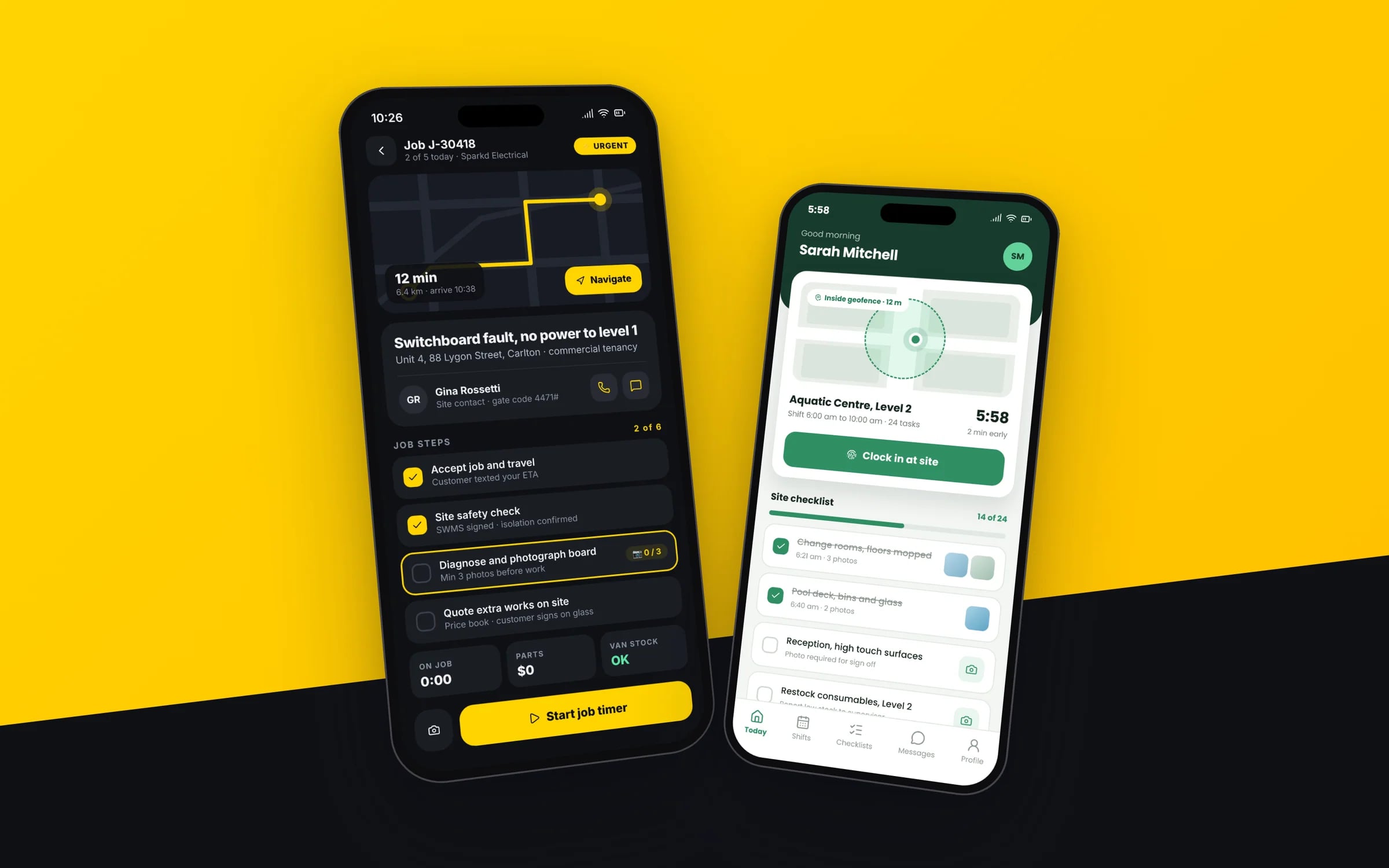
You track van stock by treating each vehicle as a stock location, with a set list of what it should carry and its minimum levels. When a tech uses materials on a job, they record them in the field app, which takes them off that van and charges them to the job at the same time. The system then builds a restock list for each van from what was used. Regular van checks on the app catch anything missed. You end up with materials charged to jobs and fewer trips back to the wholesaler.
How do I schedule recurring maintenance and service visits?
You schedule recurring maintenance by setting up each contract's sites, assets and service frequencies once, and letting the system create the visits ahead of time at the right intervals. Each visit carries the asset list, the checklist for that service type and the history from last time. Techs complete the checklist in the field app, and the results build the asset record your client's facilities manager asks for. Visits that are coming due without a booking are flagged, so contract work doesn't quietly slip.
How do I stop supplier materials being billed to the wrong job?
You stop it by raising a purchase order against a job for every order you place, and quoting that PO number to the supplier. When the supplier invoice arrives, the system matches it to the purchase order by number, checks quantities and prices, and puts the cost on the right job. Anything that doesn't match goes to a short exception list for someone to sort out. Where suppliers send invoices electronically or by email, they can be read in automatically, which removes most of the typing.
How can a trade business get paid faster after a job?
You get paid faster by invoicing when the job is marked complete, while the tech is still on site or the same afternoon, with a payment link on the invoice. Time and materials already recorded in the field app go straight onto the invoice, so nobody rebuilds the job at the end of the week. For domestic customers, taking payment on the spot by card works well. For commercial clients, the invoice goes out with their PO number, photos and paperwork attached, which removes the usual reasons for holding it.
Can I issue electrical or plumbing compliance certificates from the field app?
Yes, a field app can collect the test results and details a compliance certificate needs and produce it as soon as the work is done. Each state sets its own certificate and lodgement process, so the system follows the form and steps your regulator requires, and some regulators run their own online lodgement that the licensed worker must still complete. Certificate details are stored against the job and the asset, so you can find any certificate later and send copies to the client and their facilities manager.
Why build custom instead of using Simpro, ServiceM8 or AroFlo?
Those are solid products for many businesses. Custom makes sense when your quoting, compliance or client reporting doesn't fit their model, when you're paying for features you don't use, or when you want to own the software as an asset rather than rent it.
Can you migrate our jobs, clients and history?
Yes. We migrate clients, sites, assets and job history from your current system so nothing is lost on day one.
Will the field app work offline?
Yes. We build field apps to keep working in basements, plant rooms and regional sites, then sync when signal returns.