Hypex or Fergus? An honest look at both.
This isn't a takedown. Fergus is a capable product. The question is whether it still fits the way your business runs, or whether your team is now working around it.
What owning it looks like. Screens from systems like the ones we build.
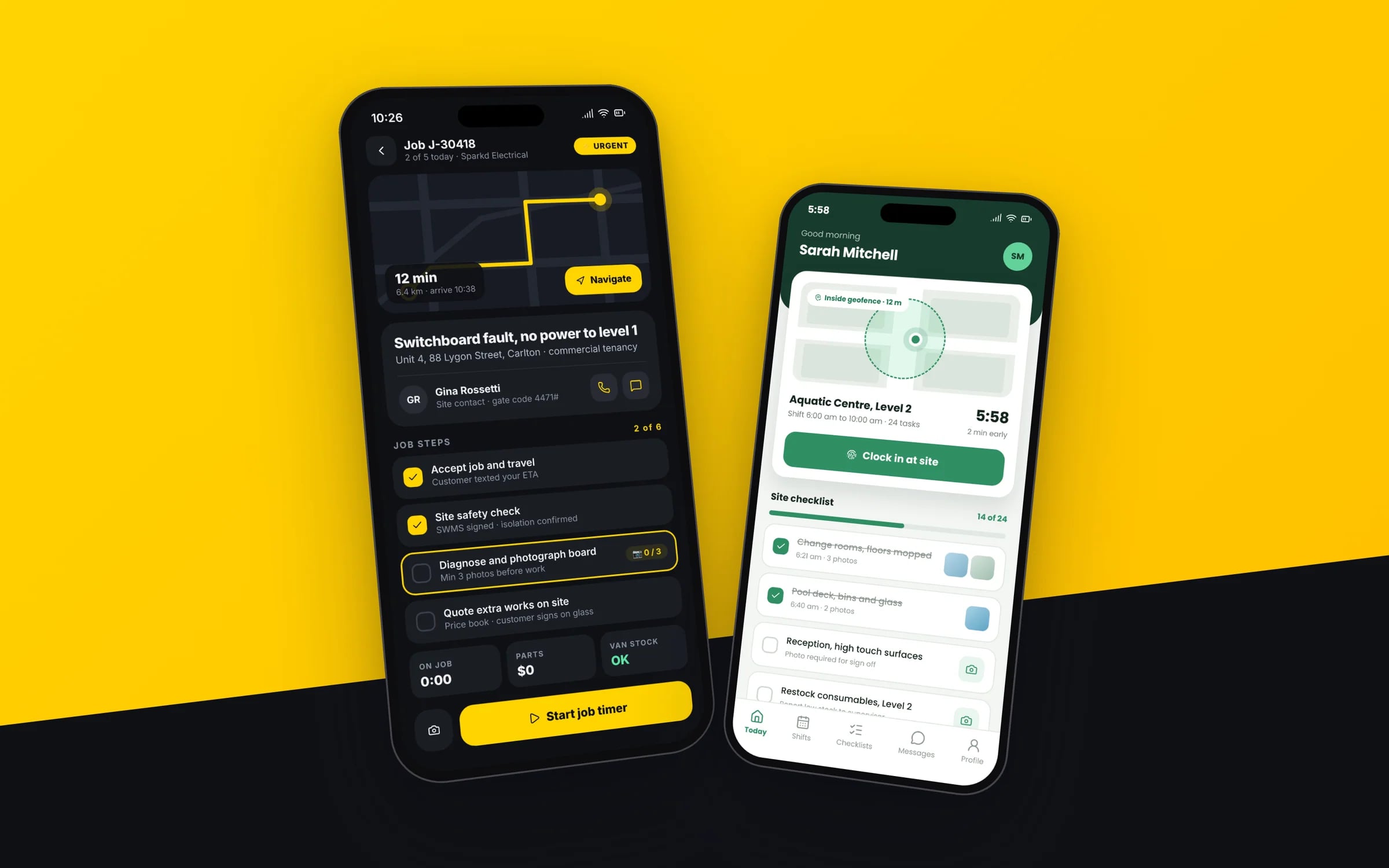
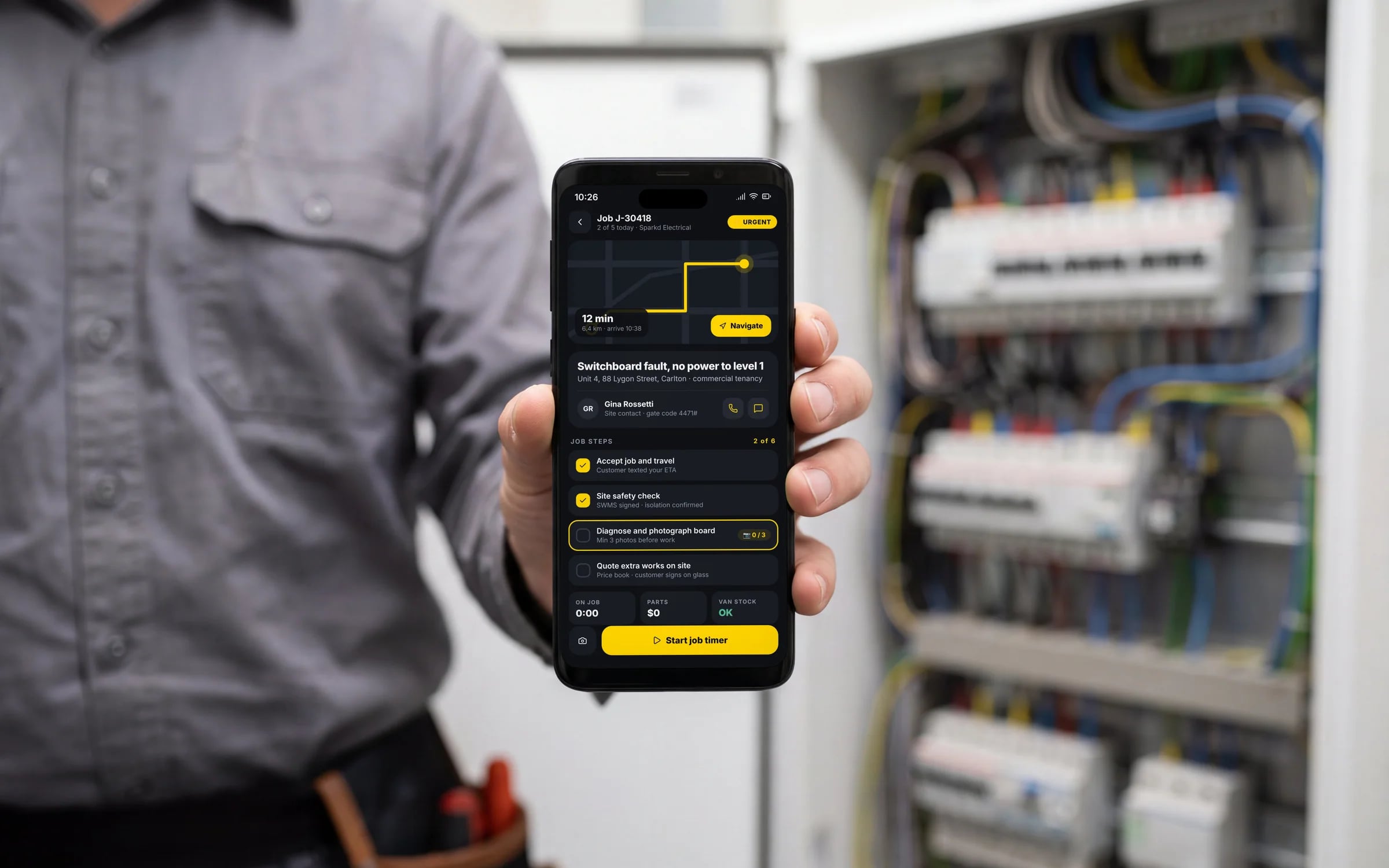
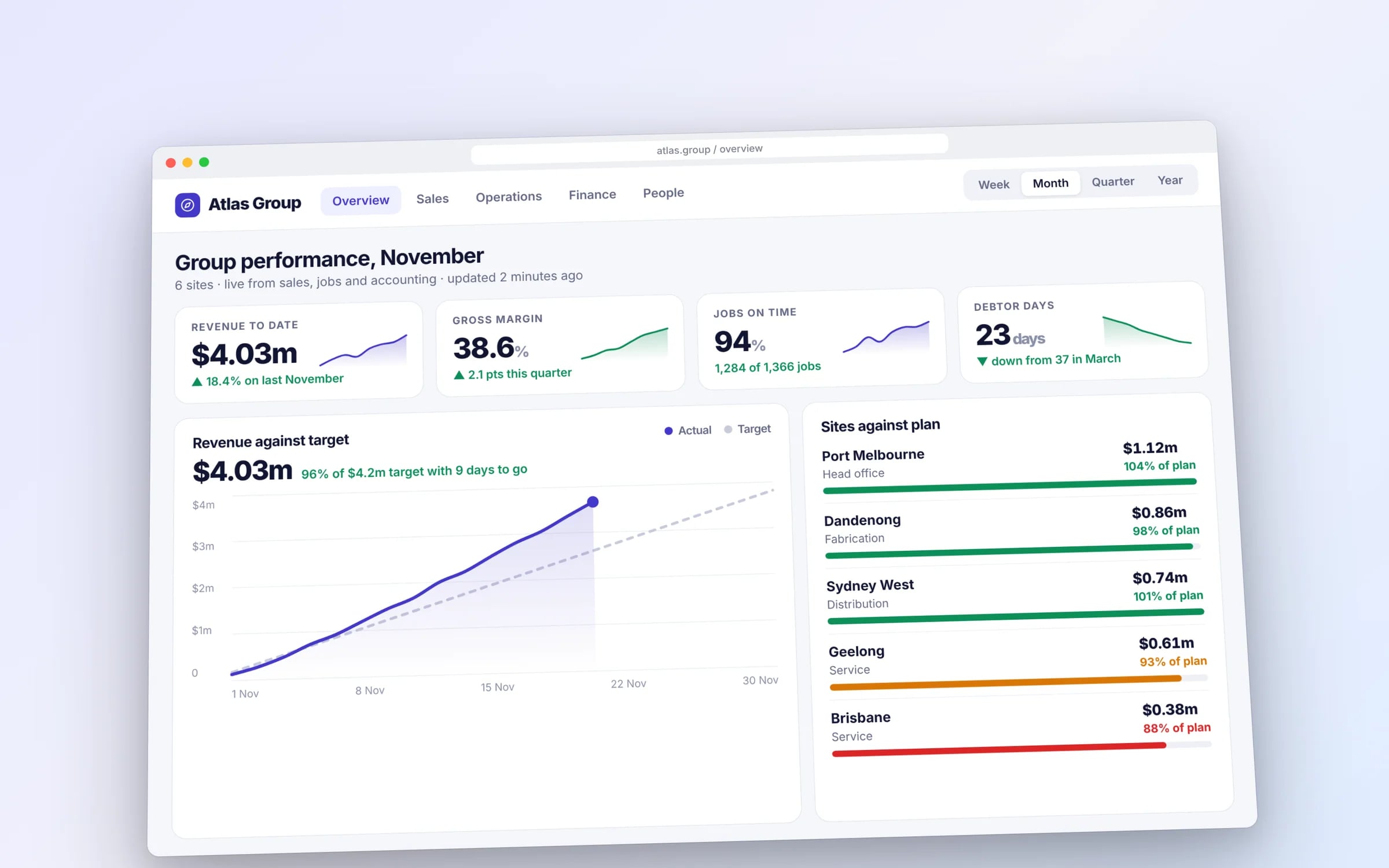
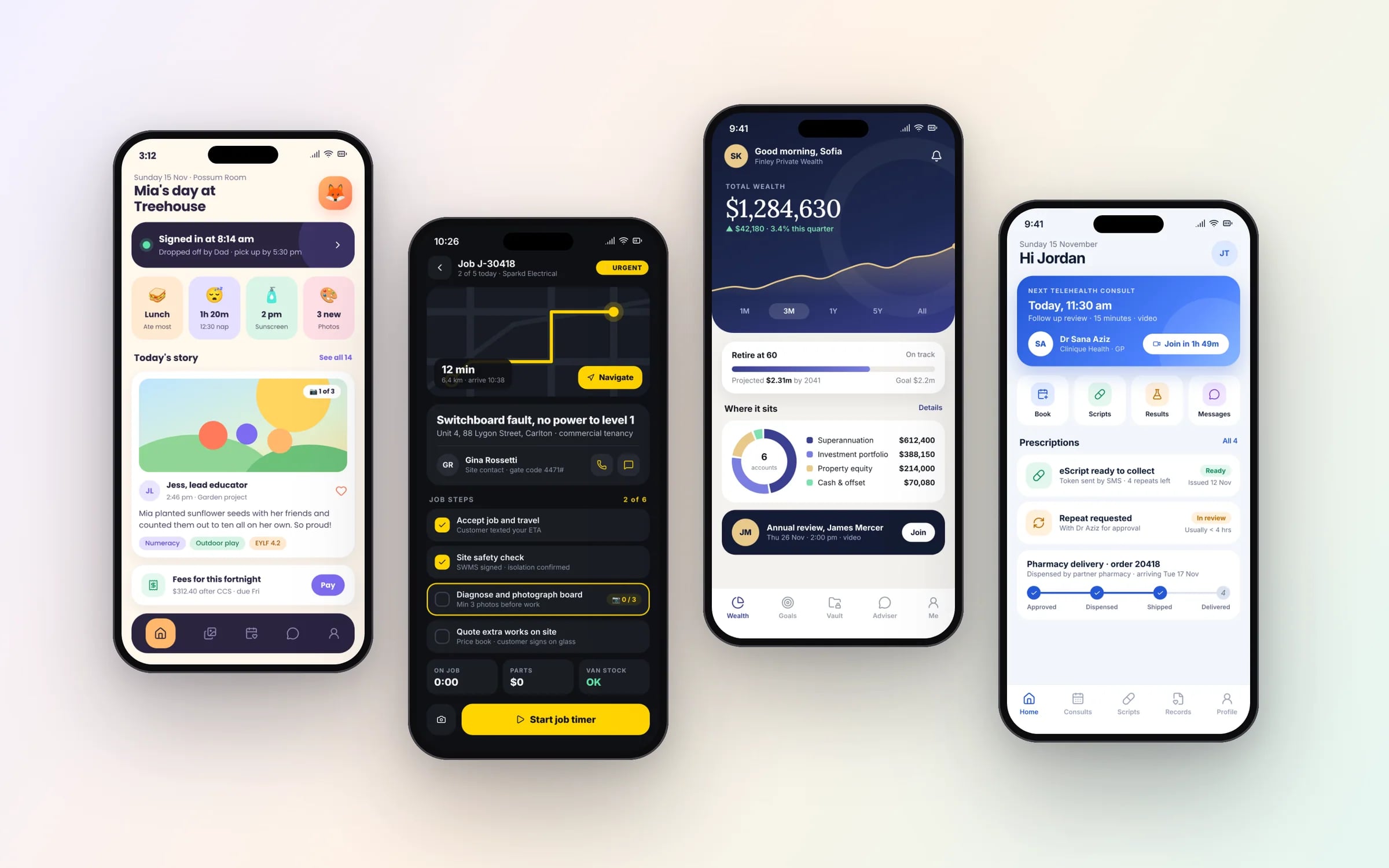
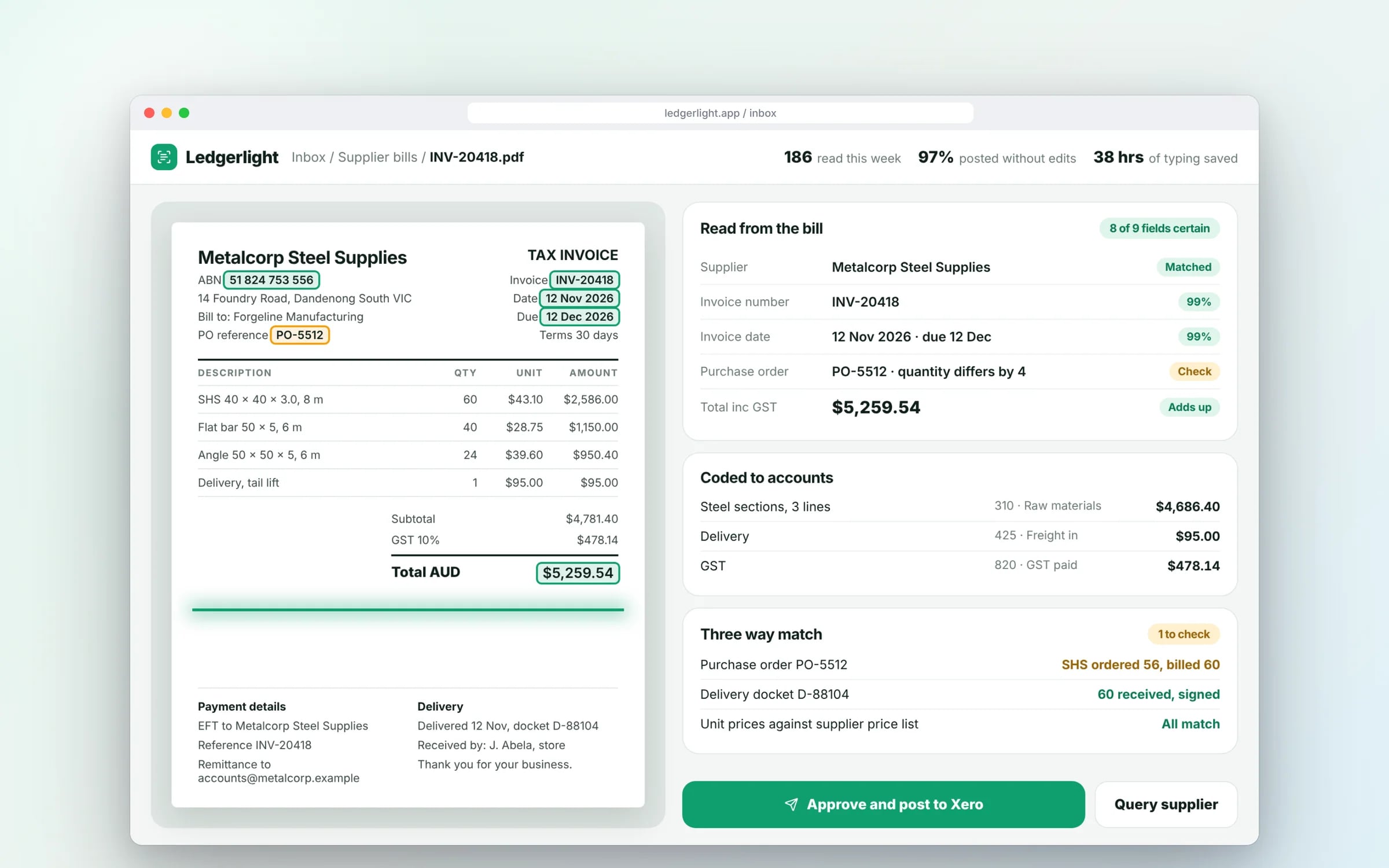
Example screens. The business names on them are invented.
What Fergus does well.
Job management software built for trades such as plumbing and electrical, covering quoting, scheduling, job costing and invoicing.
Best suited to: Trade businesses focused on job profitability.
- Designed around trade jobs
- Job costing visibility
- Quote-to-invoice in one place
Two different approaches, side by side.
Five years of renting, against owning. Per-seat pricing grows with you.
When owners usually call us. Which side are you on?
Stay with Fergus
Nothing ticked means Fergus is doing its job. Keep it, and tick anything that changes as you grow.
★★★★★
“TJ helped me in creating a super creative user interface. I got the results that I wanted.”
When to stay where you are.
If its job model fits your trade, Fergus is worth keeping.
We'd rather tell you that in a first conversation than build something you don't need.
See what we build in your industry
Should we use Fergus or have software built?
If Fergus's job model fits your trade, it is worth keeping: it is designed around trade jobs and gives clear job costing from quote to invoice.
Businesses usually move to a custom system when their process has outgrown the product's model, when they need multi-division or contract-specific workflows, or when they want to own the platform the business runs on as an asset of the business.
Reviewed by the Hypex team, Port Melbourne
Hypex or Fergus: questions answered
What are the alternatives to Fergus for plumbing and electrical businesses?
Alternatives include other trade job management products such as Simpro, AroFlo, ServiceM8 or Tradify, and a custom system built around how your business runs. Each product models a trade job in its own way, so the best fit depends on your crew size, your mix of service and project work, and how much contract work you take on. A custom system becomes the better option when no product's model matches and your team is working around the software.
Can a custom system match the job costing we get in Fergus?
Yes, a custom system can track labour, materials, subcontractors and overheads against each job, and show profit as the job progresses. It can also go further where your business needs it, such as costing by division, by contract or by stage of a larger project. Because the costing rules are yours, the figures reflect how you actually price and run work, which makes the report something managers act on.
Can we run maintenance contracts and project work in one system?
Yes, a custom system can run reactive service, planned maintenance and project work side by side, each with its own workflow, while sharing customers, staff and stock. Project jobs can have stages, variations and progress claims, while maintenance jobs follow contract schedules and checklists. Management sees all of it in one place, which is hard to achieve when different kinds of work are squeezed into a single job model.
How do we know whether to stay on Fergus or build something?
Stay on Fergus if your team works in it without workarounds and your reporting needs are met. Look at a custom system when you can name specific hours lost each week to re-keying, side spreadsheets or manual reports. A 30-minute discovery call is a practical way to test it: you get a clear view of where custom would help, and if Fergus is the right tool for you, that is a fair answer too.
Is Hypex a Fergus alternative?
Yes, for businesses that have outgrown Fergus. Instead of a packaged product, we design and build software around how your business works, and you own it. If its job model fits your trade, Fergus is worth keeping.
Can you move our data out of Fergus?
Yes. We migrate customers, jobs, history and documents from your current system so you start on day one with everything you had.
Can we keep using it while you build?
Yes. We usually run alongside your current setup and switch over part by part, so the business never stops.
Based on publicly available product information, reviewed November 2026. Products change; check current features with the vendor. Fergus is a trademark of its owner and Hypex is not affiliated with it. All comparisons
Show us how you run it today.
Thirty minutes with the people who would build it. We'll map where the hours go and tell you honestly whether custom software is worth it for you.