Should you build custom software or buy off the shelf?
Short answer. Buy when a product already fits how you work and the parts that don't fit are minor. Build when the workarounds sit in the part of your business that makes you money or makes you different, when you're paying for several tools to do one job, or when you want the system to be an asset you own. Many businesses do both: buy the commodity tools, build the core.

In this guide · 7 minute read
What off-the-shelf does better
It's ready today, and somebody else maintains it. For standard jobs it's hard to beat: accounting, email, payroll, documents. Those tools are mature, and your process there is probably the same as everyone else's.
What custom does better
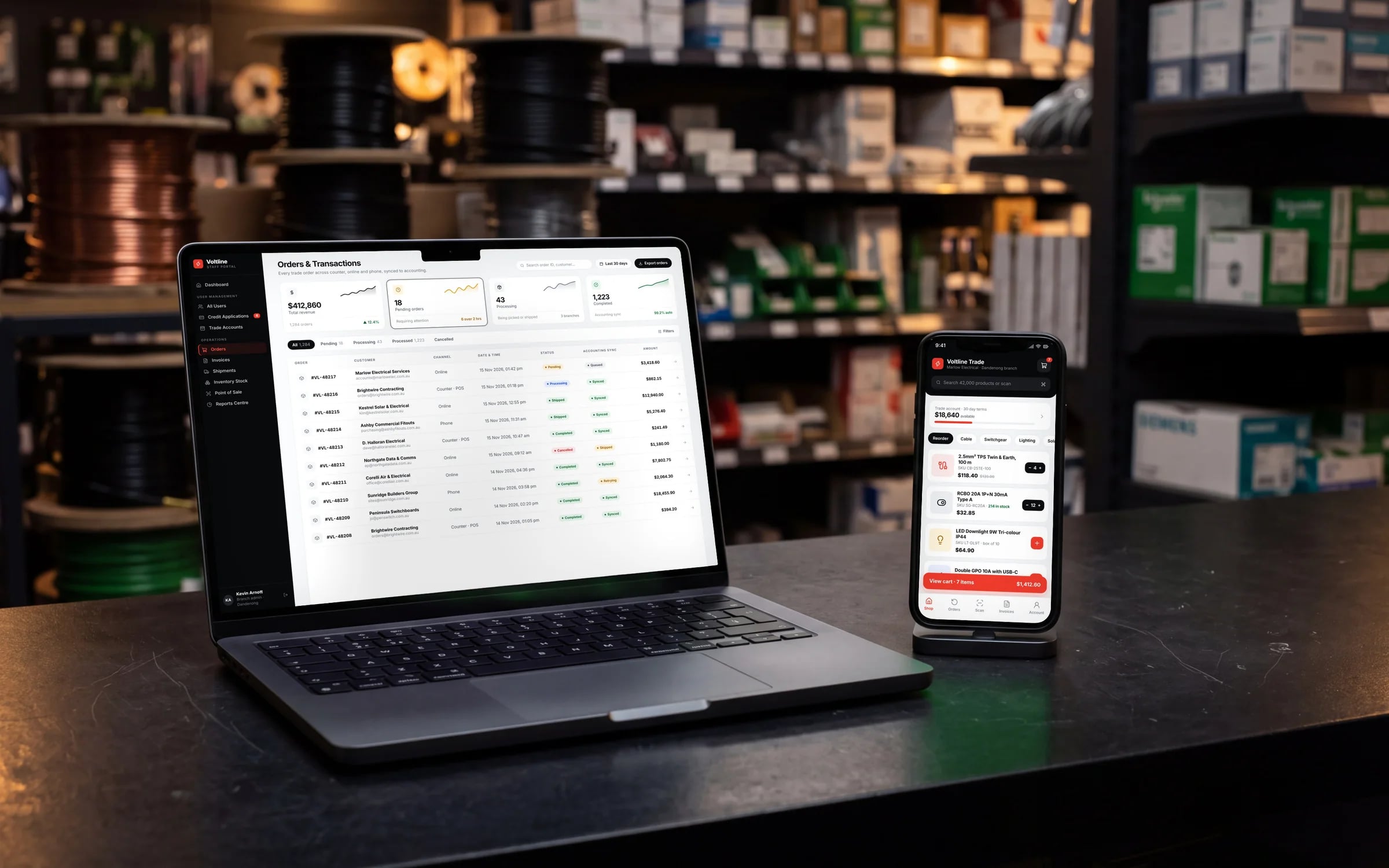
It fits the way your business actually runs, including the pricing rules, job types, approvals and reports that make you different. It joins up what would otherwise be several products. You own it, so there are no per-seat fees growing with headcount and no roadmap you don't control. And it can be built one part at a time, starting where the hours are going.
Five questions that usually decide it
- 01Is the process this tool would run a source of advantage, or the same as everyone else's?
- 02How many hours a week go into workarounds, and is that growing with the business?
- 03How many subscriptions overlap on this job, and what do they cost together as you hire?
- 04Do customers or partners need access, portals or reports in your format?
- 05Would owning the system add value if you raised money or sold the business?
- This process is part of how we win work or make our margin
- The hours spent on workarounds are growing as we grow
- Several subscriptions overlap on this one job
- Customers or partners need portals or reports in our format
- Owning the system would add value if we sold or raised money
Answer as many as you can. Not sure is fine.
★★★★★
“Great team to work with, really strive for success and provide excellent communication with any service provided.”
The middle path most businesses take
Keep Xero or MYOB, keep Microsoft 365 or Google Workspace, keep payroll. Build the operational core (jobs, orders, scheduling, stock, billing rules, customer portal) and connect it to those tools through their APIs. You get a system that fits, without rebuilding things that already work.
Terms in this guide