Every venue's stock, staff and numbers in one view. Instead of a spreadsheet from each manager on Monday.
For hospitality groups running several venues, kitchens or a central production kitchen.
Each venue has its own POS, its own ordering habits and a manager who sends numbers in a spreadsheet. Wage costs, waste and supplier prices are only visible weeks later. We build the system that sits across the group: ordering, stock, rosters against sales, and one set of numbers every morning.
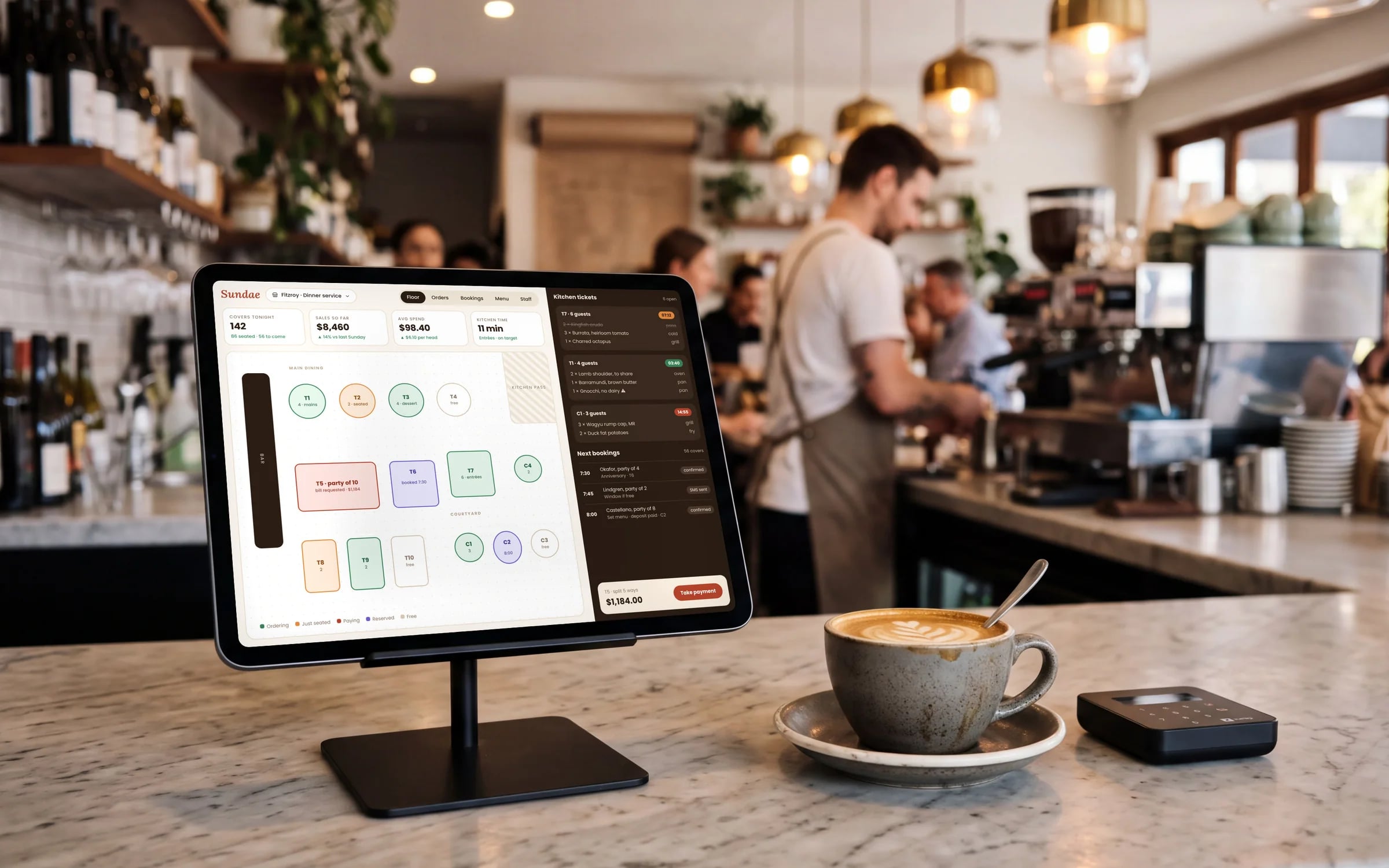
Where the hours go. What we hear from almost every business like yours.
- 01Numbers arrive a week lateSales, wages and cost of goods are pieced together from each venue after the week has gone.
- 02Ordering is done from memoryManagers order by habit, suppliers change prices quietly, and stock walks between venues.
- 03Wages drift away from salesRosters are written before anyone can see how the week is trading.
- 04Every venue does it differentlyRecipes, prep lists and supplier choices vary, so the group can't compare like with like.
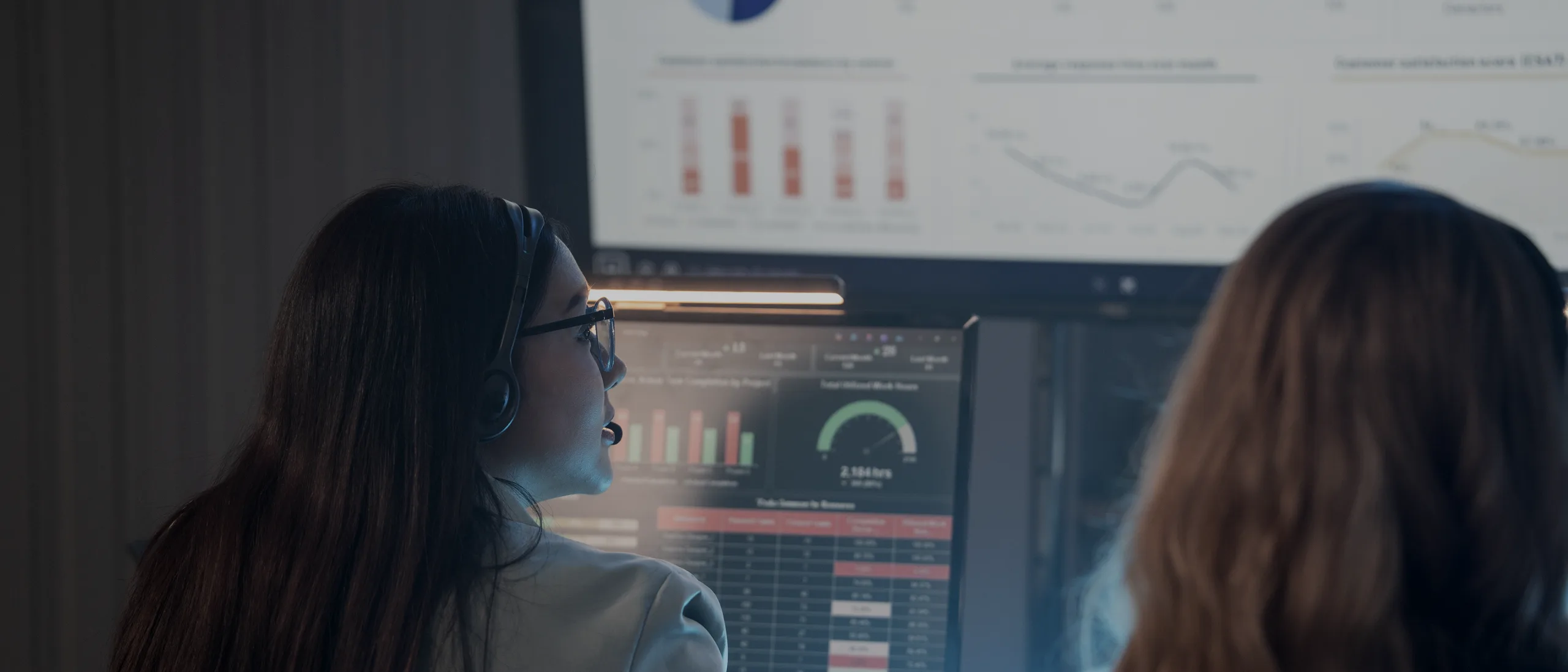
A day in your business, rebuilt. Watch it run.
The same day you have now, with the system doing the chasing. Pick any moment to stop on it.
Group dashboard · now
Yesterday's sales, wages and cost of goods by venue are on the owner's phone.
Illustrative. Based on how businesses like yours usually run.

What you're probably running now. And what replaces it.
Today6 separate tools
- A POS per venue
- A rostering app
- Supplier ordering by email and phone
- Spreadsheets for stock and waste
- Weekly manager reports
- Xero or MYOB
With your own system
One login. One record of every job, customer and dollar.
- Group dashboard
- Ordering
- Recipes & costing
- Stock & waste
- Rosters vs sales
What we'd build for you. Pick the parts that hurt most first.
Nobody needs every module on day one. We usually start with the one costing you the most hours, ship it in weeks, and add the rest as it proves itself.
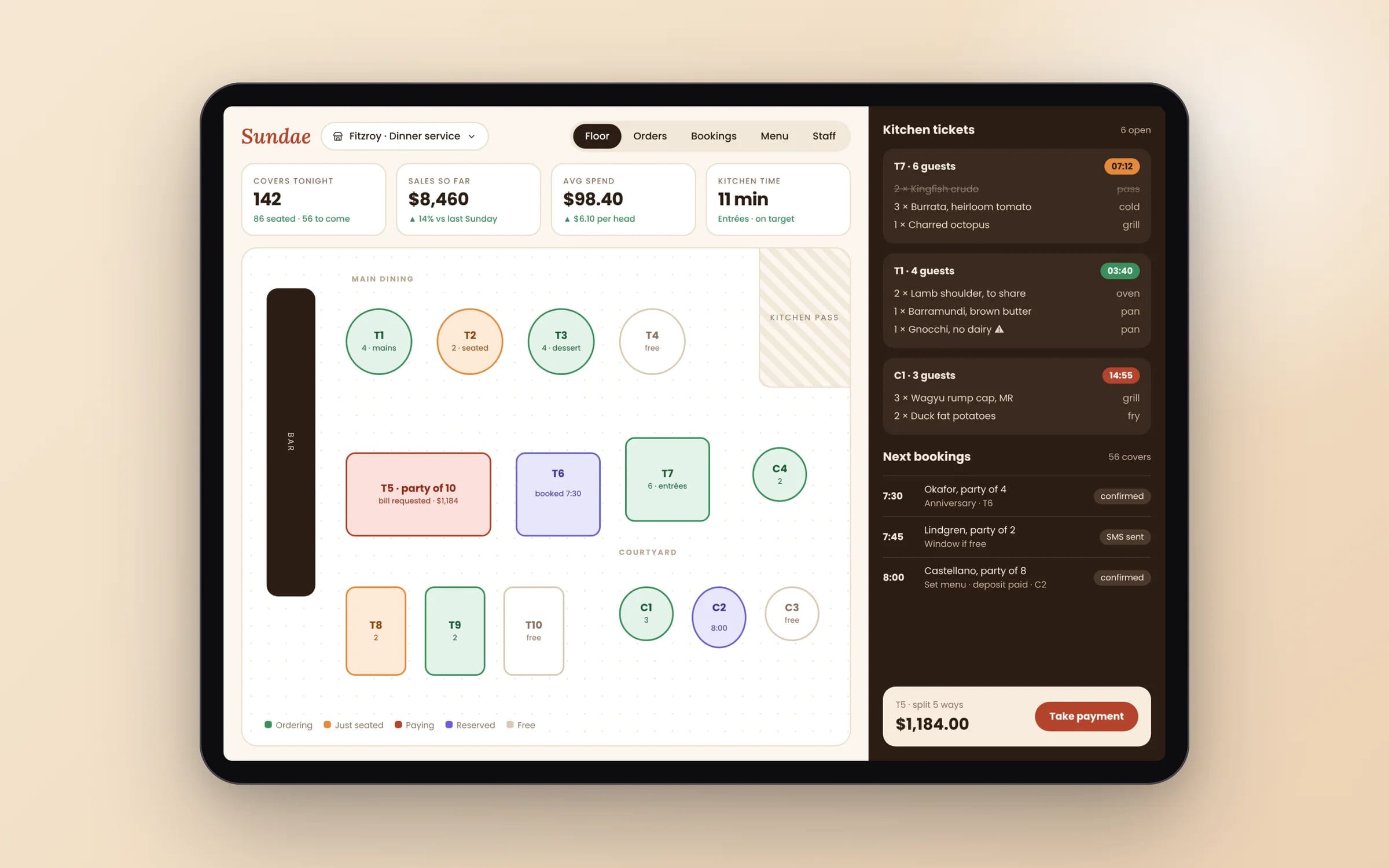
Group dashboard
Sales, wages and cost of goods by venue, every morning.
Ordering
Suggested orders by venue, sent to suppliers, received against invoices.
Recipes & costing
Recipe costs that update when supplier prices change.
Stock & waste
Counts, waste, transfers and central kitchen production.
Rosters vs sales
Rosters checked against forecast trade before the shift.
★★★★★
“We were impressed with the sheer professionalism displayed by TJ and Harry.”
Three numbers that agree. Takings, the books and the bank, matched every night.
Sales from the till, the ledger and the bank feed are matched every night. Anything that doesn't reconcile is flagged for the morning with its reason beside it.
Five years of renting, against owning. The gap is what you keep.
The rules you work under. Built into the system, so the record keeps itself.
- Food Standards Code, Standard 3.2.2A Food Safety Management Tools
- The system records each venue's food safety supervisor, food handler training and, for venues that must keep them, records of key food safety activities.
- Food Standards Code allergen declaration requirements
- Allergens are recorded on every recipe and flow from ingredients, so staff can answer a customer's allergen question from the current recipe.
- State liquor licensing and responsible service of alcohol requirements
- RSA certificates are recorded per staff member with their state and expiry, and the roster flags shifts serving alcohol without a current certificate.
- Hospitality Industry (General) Award 2020 and Restaurant Industry Award 2020, with Fair Work record keeping
- Start and finish times, breaks and classifications are recorded per shift so payroll applies the award your venues operate under.
- Single Touch Payroll
- Approved hours go to your STP-enabled payroll system, so wage cost in the dashboard and reported pay come from the same records.
The numbers you’d see live
- Wage cost as a share of sales by venue and daypart
- Cost of goods by venue against target
- Waste by venue and category
- Supplier price rises above threshold this week
- Food safety checks missed by venue
- Staff with RSA or food safety certificates expiring soon
How it all connects. One core, and the tools you keep.
Your accounts, payroll and the other tools that work stay where they are. The system sits in the middle, so nobody types anything twice. Hover or tap a tool to see what moves across.
Parts of your system
- Group dashboard
- Ordering
- Recipes & costing
- Stock & waste
- Rosters vs sales
Running
Your system
Hospitality groups
- Logins
- One
- Record of each job
- One
- Owner
- You
Your system → Xero
Agents do the reading and typing. People keep the decisions.
The agents run inside your own system, on your data and your rules. They read, match and draft. Wherever money, safety or a customer is involved, a person signs off, and every action is logged.
Morning numbers
TodayManagers send spreadsheets; someone stitches them together.
With an agentPulls sales, wages and purchases from each venue overnight and writes a short summary of what moved.
Where you come inYou decide what to act on.
Supplier invoices
TodayInvoices are keyed in, and price rises slip through.
With an agentReads each supplier invoice, matches it to the order and flags any price change against your recipes.
Where you come inPrice changes over your threshold need a yes.
Ordering
TodayManagers order from habit at the end of a long shift.
With an agentDrafts each venue's order from sales, par levels and stock on hand.
Where you come inThe manager reviews and sends it.
What software does a hospitality groups business need?
A multi-venue hospitality group needs one daily view of sales, wages and cost of goods by venue, supplier ordering against par levels, recipe costing that follows supplier prices, stock, waste and transfers between venues, and rosters checked against forecast covers.
Each venue usually has its own POS, rostering habits and manager spreadsheet. A group system pulls from the tools each venue uses and gives the owner one set of numbers every morning.
Reviewed by the Hypex team, Port Melbourne
Hospitality groups: questions owners ask.
What is the best multi venue hospitality reporting software?
The best multi venue reporting software is one that pulls sales from every venue's POS, wages from your rostering or payroll tool and purchases from supplier invoices, and shows them side by side each morning. POS systems such as Square and Lightspeed report well within their own venues, and rostering tools such as Deputy show wage cost. Groups running different tills across venues, or a central kitchen, usually have no single place where sales, wages and cost of goods meet. A custom group dashboard connects to each tool through its API, so venues keep their systems and you read one report.
How do I keep wage cost in line with sales across several venues?
You keep wage cost in line with sales by checking each venue's roster against forecast trade before the shift starts, then comparing actual wages with actual sales the next morning. Forecast covers and sales come from the same day in previous weeks, bookings and events. The system shows each roster's wage cost as a share of forecast sales, and prompts the manager when a venue is over the target you set. After service, actual sales from the POS and hours from timesheets give the real figure by venue and by daypart, so problems are seen in days.
How does recipe costing update when supplier prices change?
Recipe costing updates when supplier prices change by linking every recipe ingredient to the supplier product it is bought as, so each new invoice price flows through to the recipes that use it. When an invoice is received, the system compares each line with the last price paid and flags rises above the threshold you set. Every affected recipe and menu item is recalculated, showing the new plate cost and gross margin at the current menu price. Your chef or group manager sees which dishes need a price change or a substitute before the next menu print.
How do I run stock for a central production kitchen supplying several venues?
You run a central kitchen by treating it as its own location that buys raw ingredients, records production batches and transfers finished items to venues at a set internal cost. Venues order from the central kitchen the way they order from suppliers, against their par levels. Each production batch records what went in, what came out and the use-by date, and each transfer reduces kitchen stock and increases venue stock. Cost of goods then sits correctly at each venue, and the kitchen's own yield and waste are visible instead of disappearing into the group total.
How do I compare venues when each one runs things differently?
You compare venues by putting them on shared definitions: the same product codes, recipe library, stock count method, waste categories and reporting periods across the group. The system holds one master list of products and recipes that each venue uses, while still allowing venue-specific menus and suppliers. Stocktakes follow the same method and timing, and waste is logged in the same categories. Once that is in place, cost of goods, wage percentage and waste can be compared fairly, and the gap between your best and weakest venue shows up as specific items.
How do I keep food safety records and staff certificates current across a group?
You keep food safety records current by having each venue log temperature checks, cleaning and receiving in an app against a schedule, with missed checks flagged to the venue manager the same day. Staff certificates such as RSA and food safety supervisor are recorded with expiry dates, and the roster warns when someone without a current certificate is placed on a shift that needs one. The group manager sees every venue's status on one screen. When an inspector or licensing officer visits, the venue can show its records and certificates from the same place.
Can you build software for a hospitality group?
Yes. We build group-level systems that sit across your venues: ordering and supplier pricing, recipe costing, stock and waste, rosters checked against sales, and one dashboard across every venue.
Do we have to replace our POS?
Usually not. We connect to your POS where it offers an API and pull sales into the group system, so venues keep the tills they know.
You own it
The software and its source code belong to your business. No per-seat fees growing with every hire.
What owning meansFunding may help
Parts of some builds may qualify for the R&D Tax Incentive. We'll help you and your adviser work out which.
How the incentive worksKnow your numbers
Add up what your subscriptions, re-keying and workarounds cost you each year before you talk to anyone.
Open the calculatorWeighing up a packaged product?
Other industries we build for
Show us how you run it today.
Thirty minutes with the people who would build it. We'll map where the hours go and tell you honestly whether custom software is worth it for you.