MVP Development. A working first version scoped to prove the idea fast.
We scope the smallest version that proves the idea works, ship it in weeks, and use what it teaches before committing to the full build.

You probably need this when
- 01We have an idea we believe in but can't justify the full build budget yet.
- 02The board wants proof before it signs off on a bigger project.
- 03We keep debating features in meetings instead of watching people use something.
- 04One customer asked for this, and we want to know if others in the trade would pay too.
- 05We need something working to show investors.
What it can look like. Screens from systems like this.
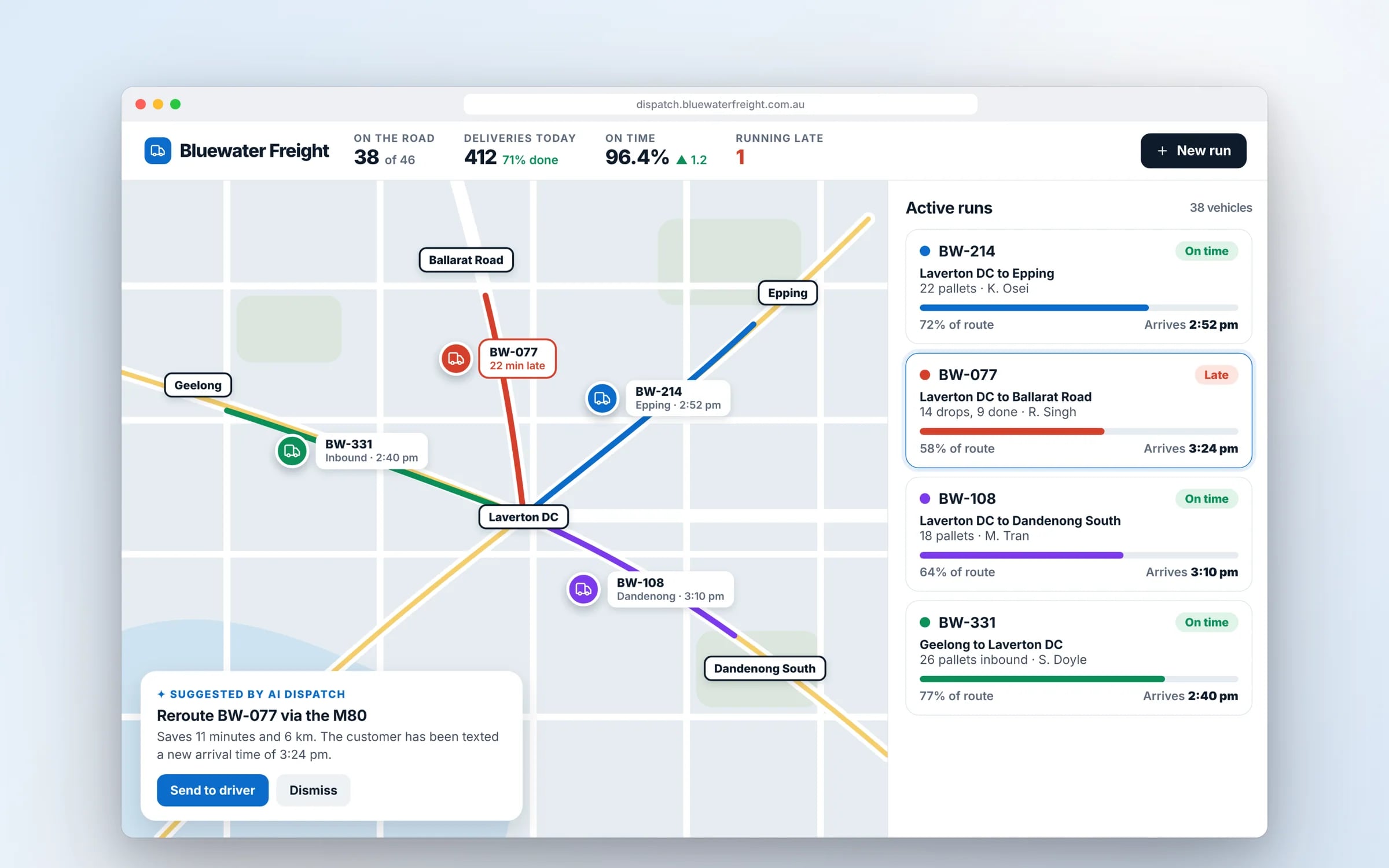
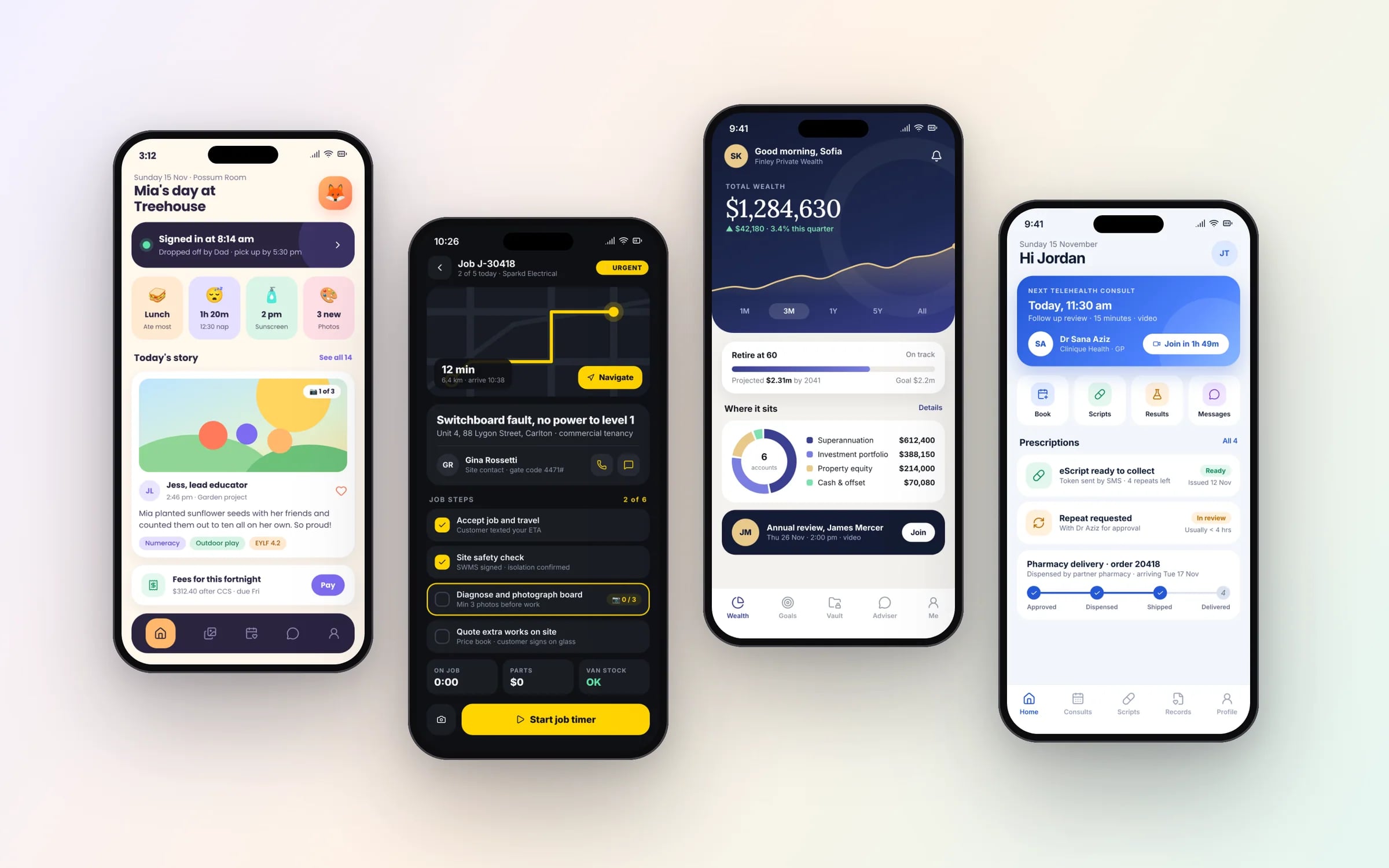
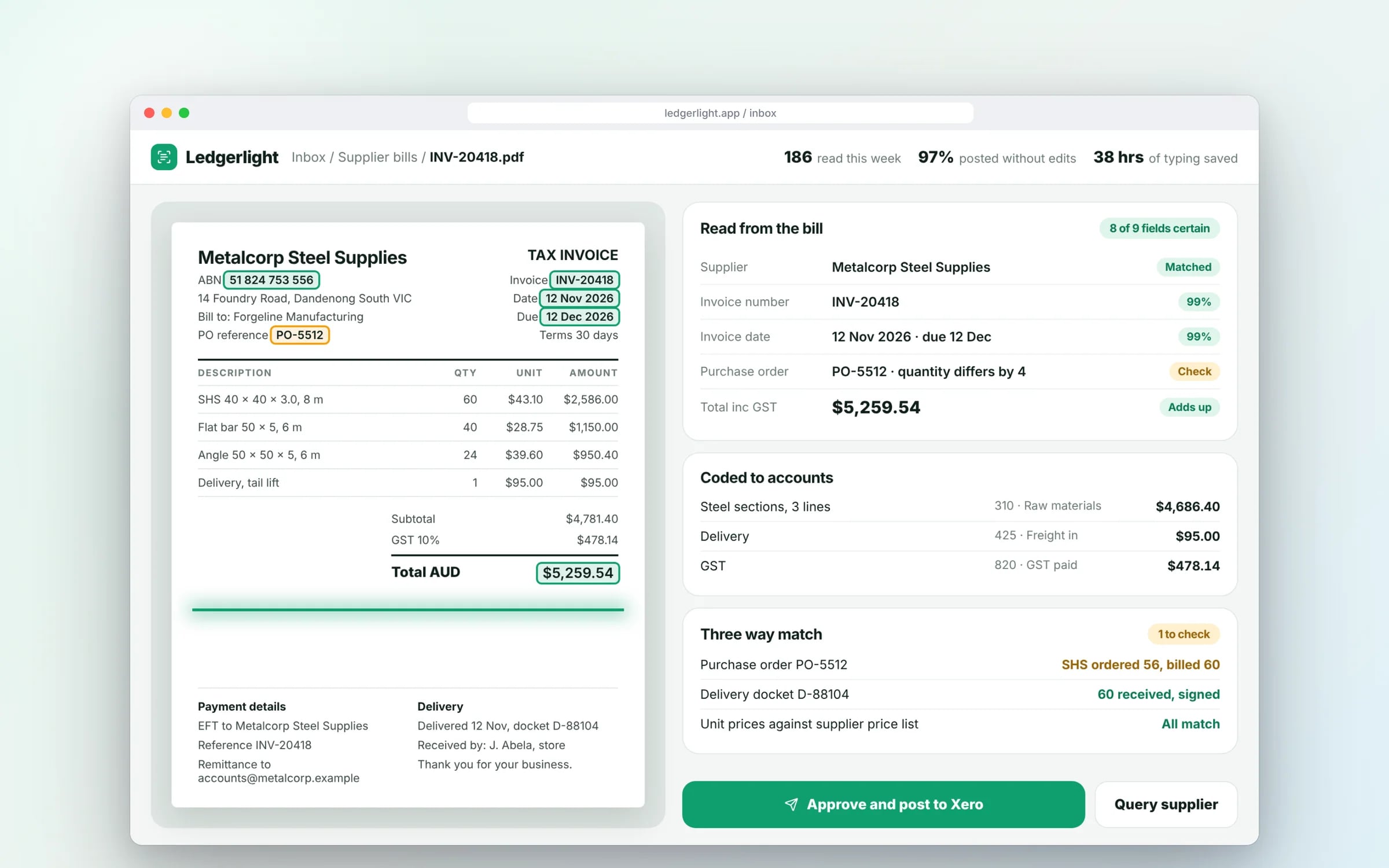
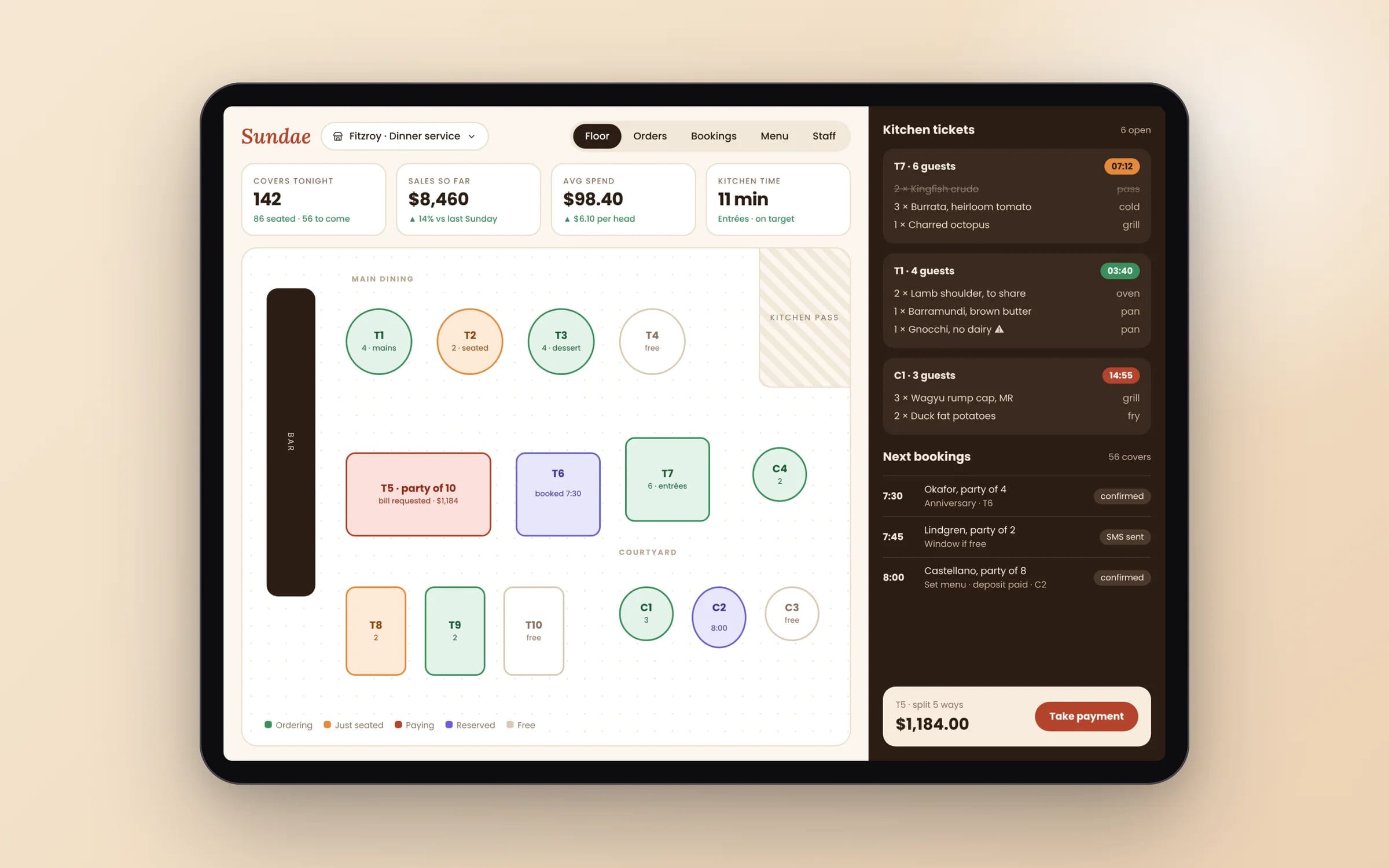
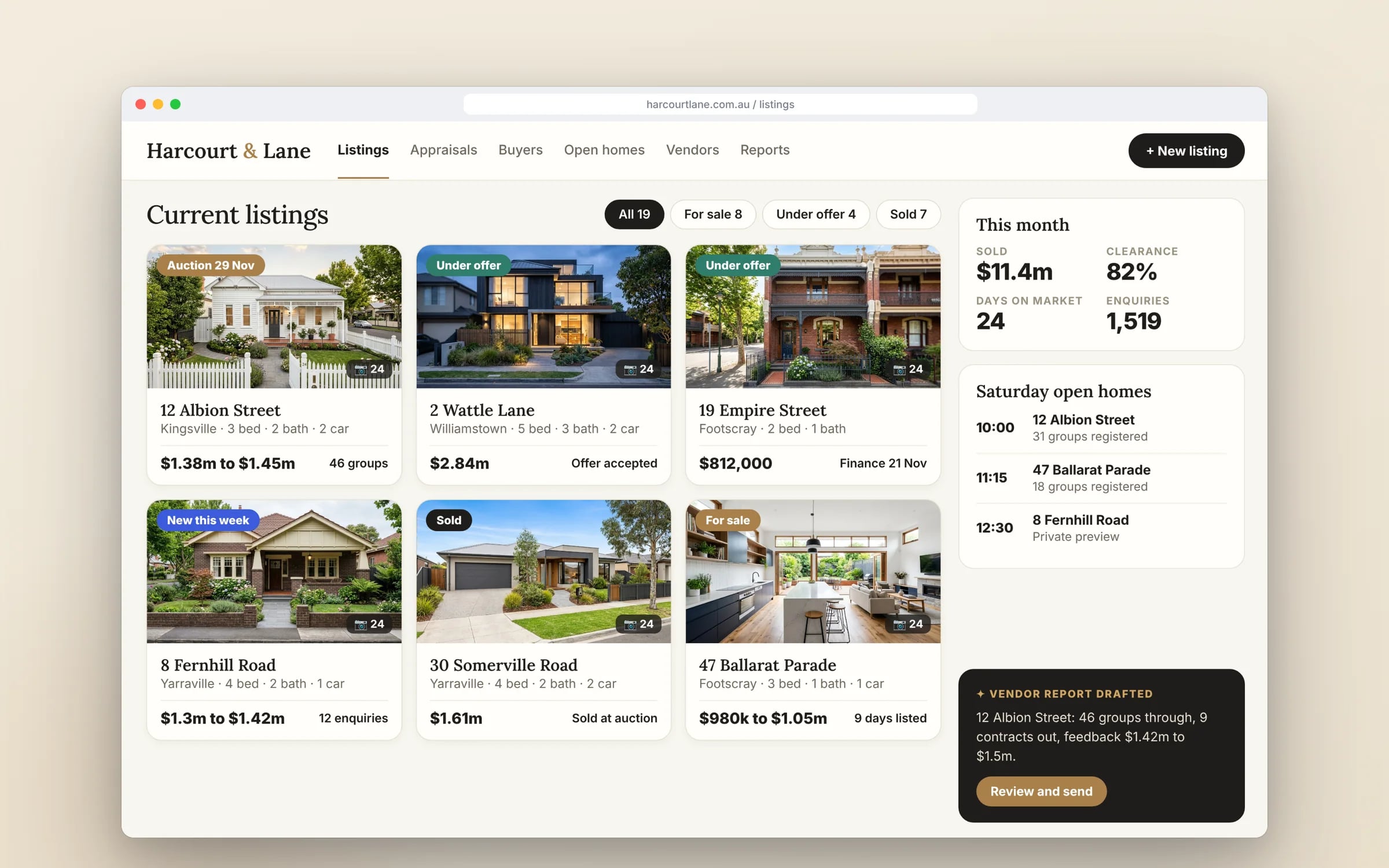
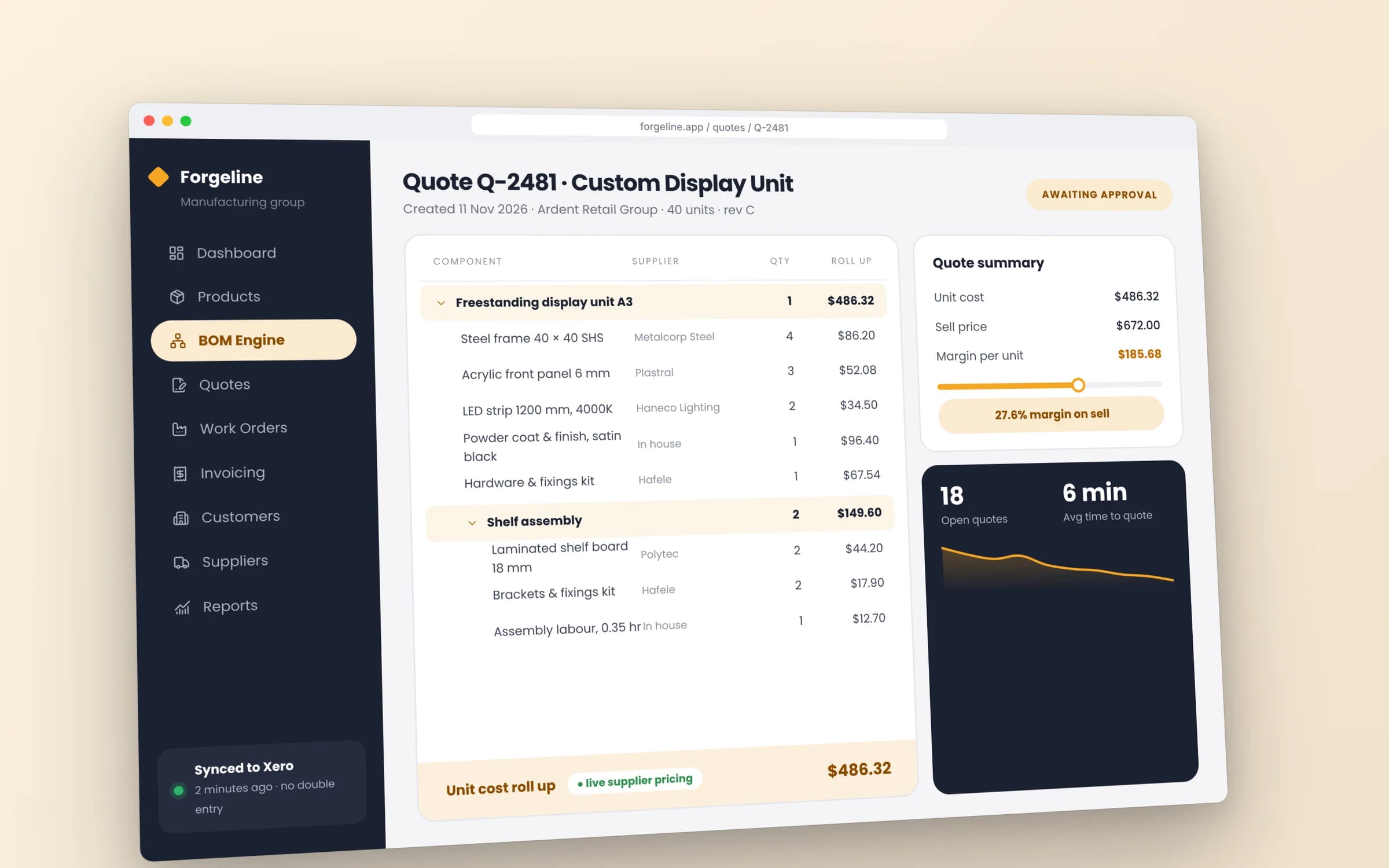
Example screens. The business names on them are invented.
What happens, in order.
1Cut the scope
Every feature ranked by what it tests; anything that tests nothing goes on a later list.
2Map and price
A system map with the build order and a fixed price for the MVP stage and what may follow.
3Build the core flow
The one path users must complete, built first and usually in use within weeks.
4Instrument and release
Analytics on each key step, then a release to a small group of real users.
5Review the findings
What users did, where they stopped, and what to build, change or drop next.
Five years of renting, against owning. The gap is the point.
Ten weeks to version one. Brief, prototype, release, handover.
A first version scoped to the smallest thing worth putting in front of real users, with a clickable prototype at the halfway mark so nothing surprises you at the end.
What you walk away with.
- 01A scoped feature list ranked by what actually needs testing
- 02A working MVP live with real users inside weeks
- 03A findings review that shapes the next build phase
★★★★★
“TJ helped me in creating a super creative user interface. I got the results that I wanted.”
What is MVP Development?
An MVP, or minimum viable product, is the smallest working version of a software idea that real users can use, built to test whether the idea works before the full budget is committed.
It suits founders validating demand, businesses testing a new service line, and managers who need working evidence before a larger build is approved.
Reviewed by the Hypex team, Port Melbourne
Questions owners ask.
How long does an MVP take to build?
An MVP usually takes weeks to a few months, depending on how tightly the scope is cut; at Hypex the first working part is usually in use within weeks, and a typical first release is about ten weeks from brief to handover. What stretches the timeline is scope that keeps growing, integrations with other systems, and waiting on decisions. Cutting features that do not test the core idea is the fastest way to shorten it. If the list includes admin dashboards, detailed reporting and every edge case, it has stopped being an MVP.
What features should an MVP include?
An MVP should include only the features needed to test the assumption that would sink the idea if it were wrong, plus whatever a user needs to get through that flow. For a booking idea, that might be a customer requesting a job, a business accepting it and both being notified; ratings, discount codes and reporting can wait. Write each feature next to the question it answers. Anything that does not answer a question about demand, willingness to pay or whether the workflow is usable comes out.
Is a no-code tool good enough for an MVP?
A no-code tool is often good enough to test whether people want something, and worth considering when the idea is mostly forms, lists and simple workflows. It struggles when the MVP needs real business logic, such as pricing rules, scheduling across staff, accounting integrations or data you must control. The other cost is that no-code MVPs are usually rebuilt from scratch once they work. If the MVP is likely to become the product, a lean custom build on a stack that can grow avoids paying twice.
How do I measure whether an MVP worked?
Decide before launch which actions would prove the idea, then measure whether real users take them: completed bookings, repeat orders, quotes accepted, or users returning without being reminded. Sign-ups and compliments are weak evidence. Analytics should be wired in from day one so every key step is tracked, and you should talk to a handful of users about where they got stuck. The findings review at the end turns that evidence into a decision: build out, change direction or stop.
Can I raise investment with an MVP instead of a pitch deck?
Yes, a working MVP with real usage is usually stronger evidence for investors than a deck, because it shows the product can be built and that people use it. What persuades is the usage: how many people came back, what they paid or committed to, and what you learned. A demo nobody has used proves only that it can be built. Make sure your business owns the code and the cloud account it runs in, since investors may ask who controls the IP behind the product.
What happens to the MVP after it has been tested?
After testing, the MVP is extended into the full product, reshaped around what users actually did, or stopped before more money is spent. If it was built on a stack chosen to grow, the code is kept and the next stages are added to it. The findings review sets the order: fix what blocked users first, then build what they asked for most. Stopping is a valid outcome, and far cheaper at this point than after a full build.
What moves the cost and the timeline.
After a 30-minute call you get a system map with a fixed price for each stage, before any work starts. These are the things that shape it.
- How many user types the MVP must serve, one side or two
- Payments, if users must pay inside the MVP
- Integrations that cannot be handled manually at first
- Whether the MVP must be built to grow into the full product
Built for businesses like yours
Show us how you run it today.
Thirty minutes with the people who would build it. We'll map where the hours go and tell you honestly whether custom software is worth it for you.