Product Development. End to end build of a market ready software product.
From first spec to production release, one team carries a product through design, engineering and launch, so nothing gets lost between handoffs.

In numbers.
How it runs, step by step.
- Step 1
Discovery and system map
A 30-minute call, then a map of every part of the product, the build order and a fixed price per stage.
- Step 2
Design the core flows
Screens for the jobs users do most, checked with real users before engineering commits to them.
- Step 3
Build in stages
The part costing the most hours goes first, so a working piece is usually in use within weeks.
- Step 4
Test on real work
Each stage runs beside the current process until the results match.
- Step 5
Launch and hand over
Code, cloud account, design files and documentation handed over, ready for your team or ours to maintain.
What it can look like. Screens from systems like this.
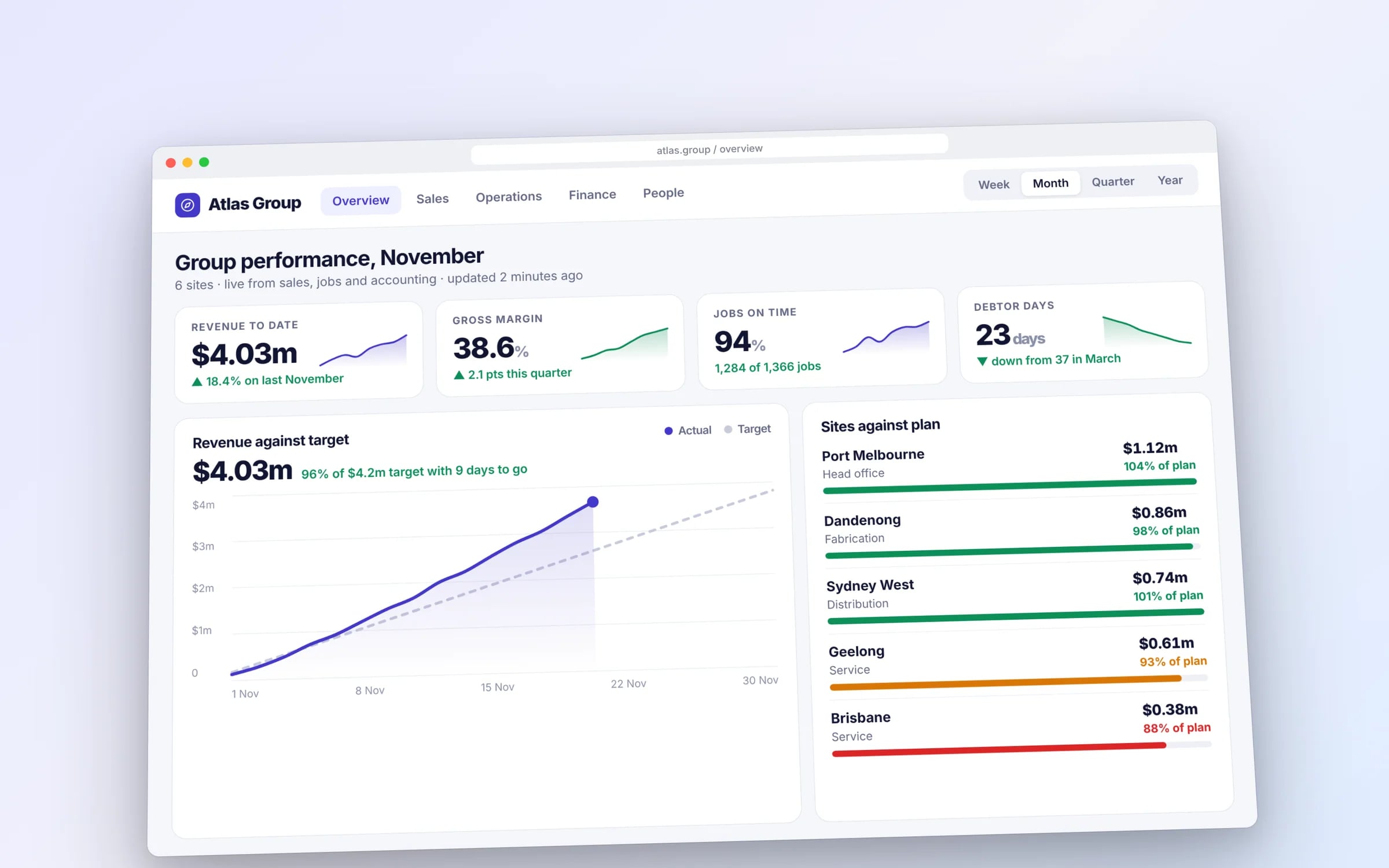
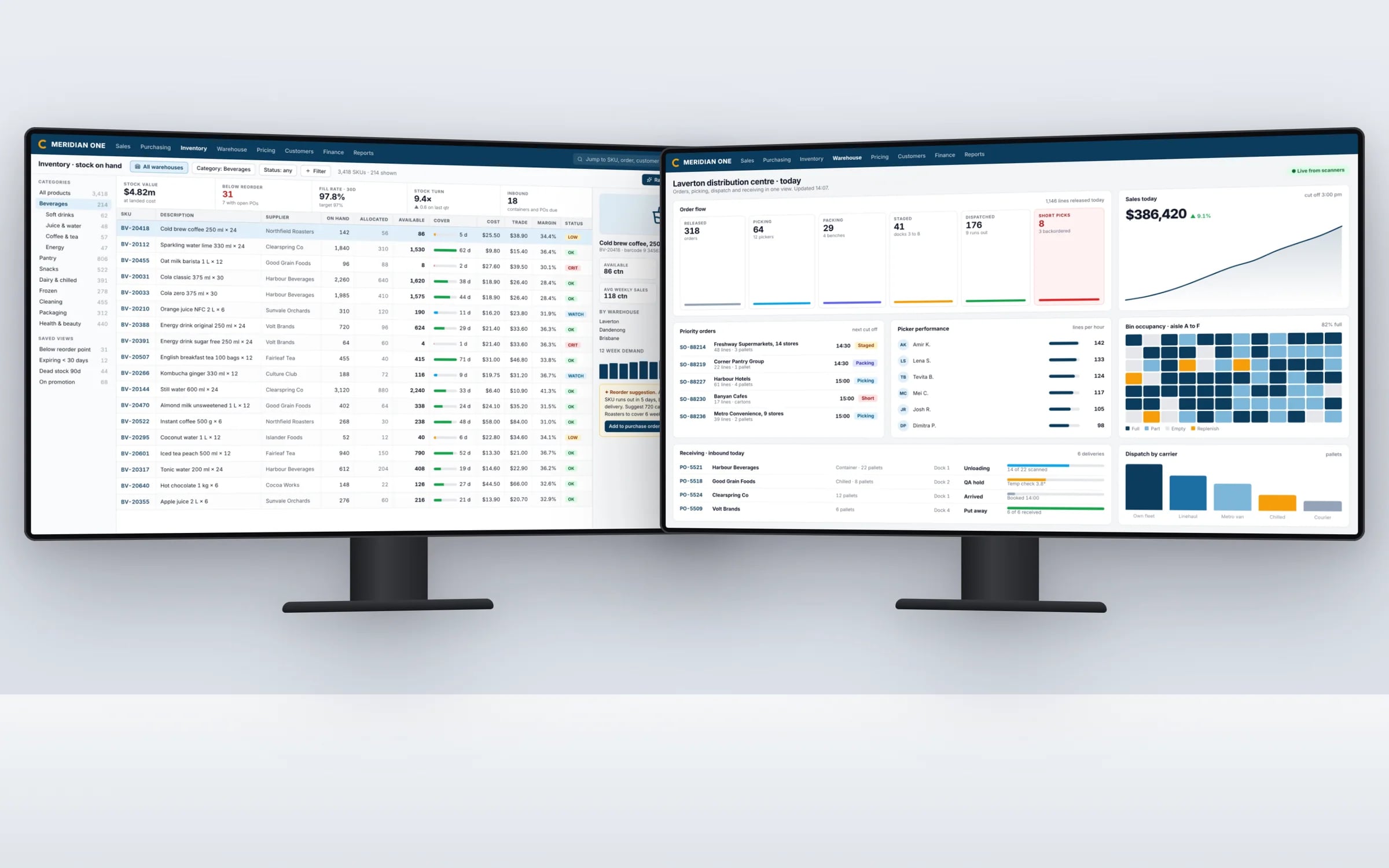
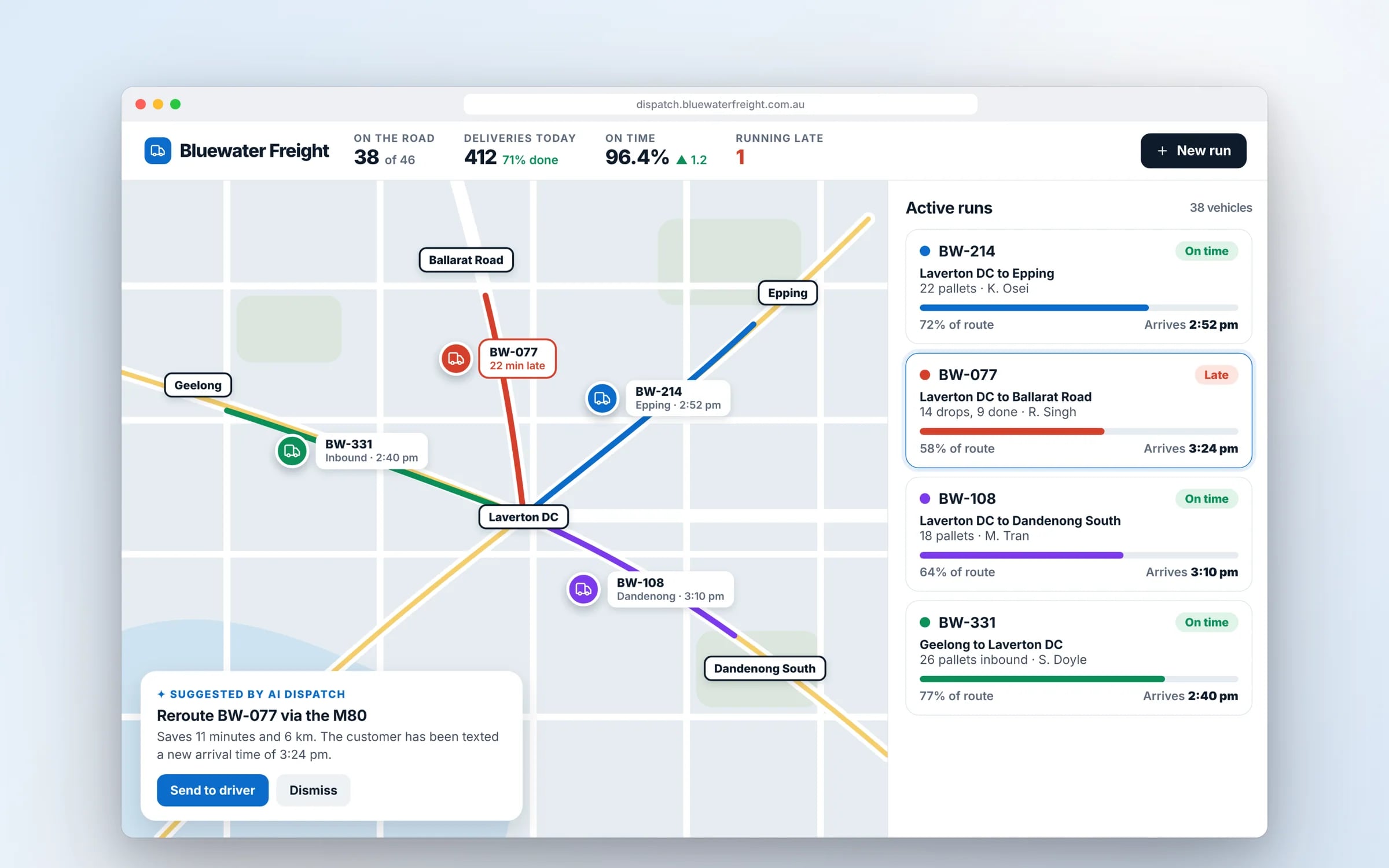
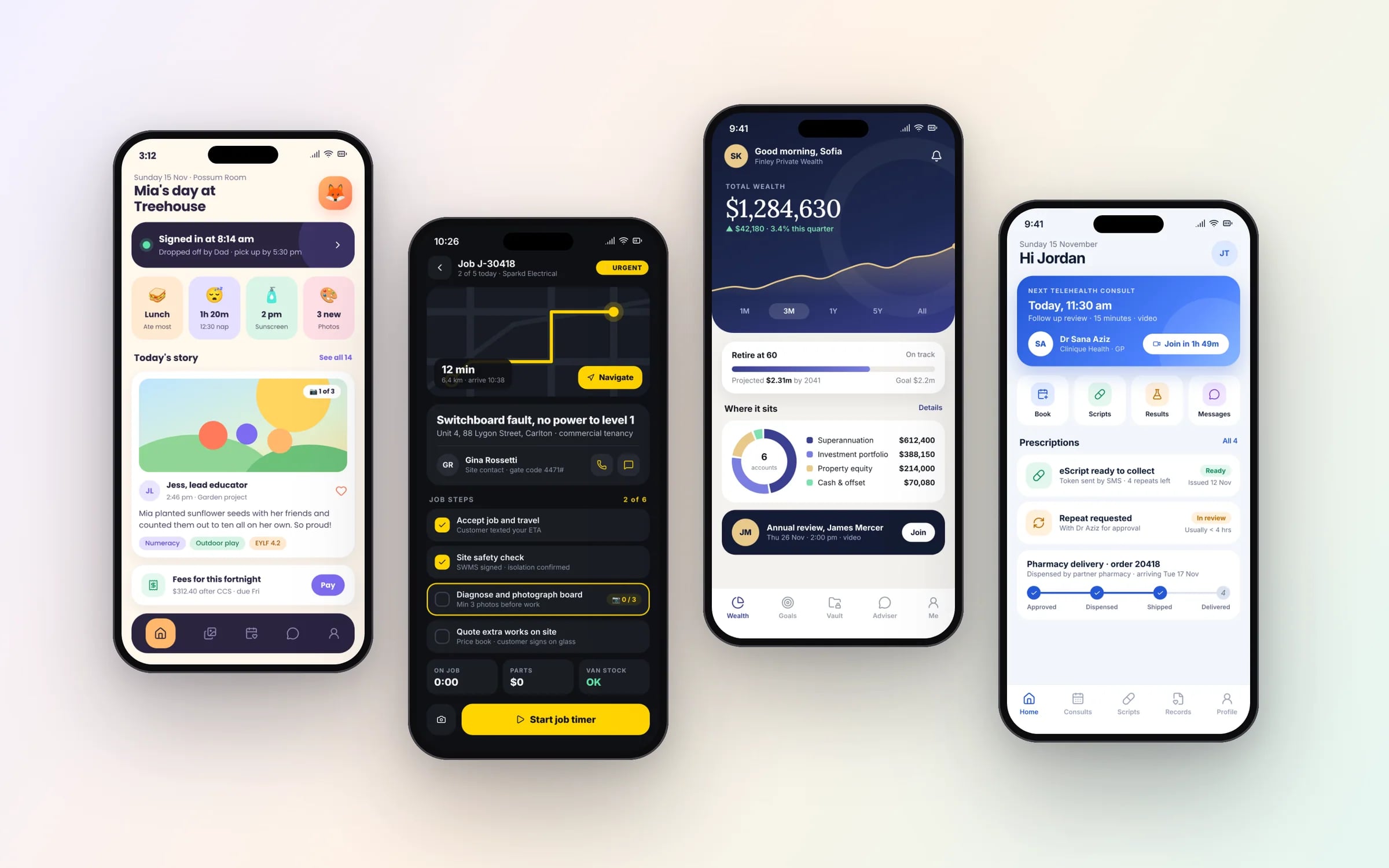
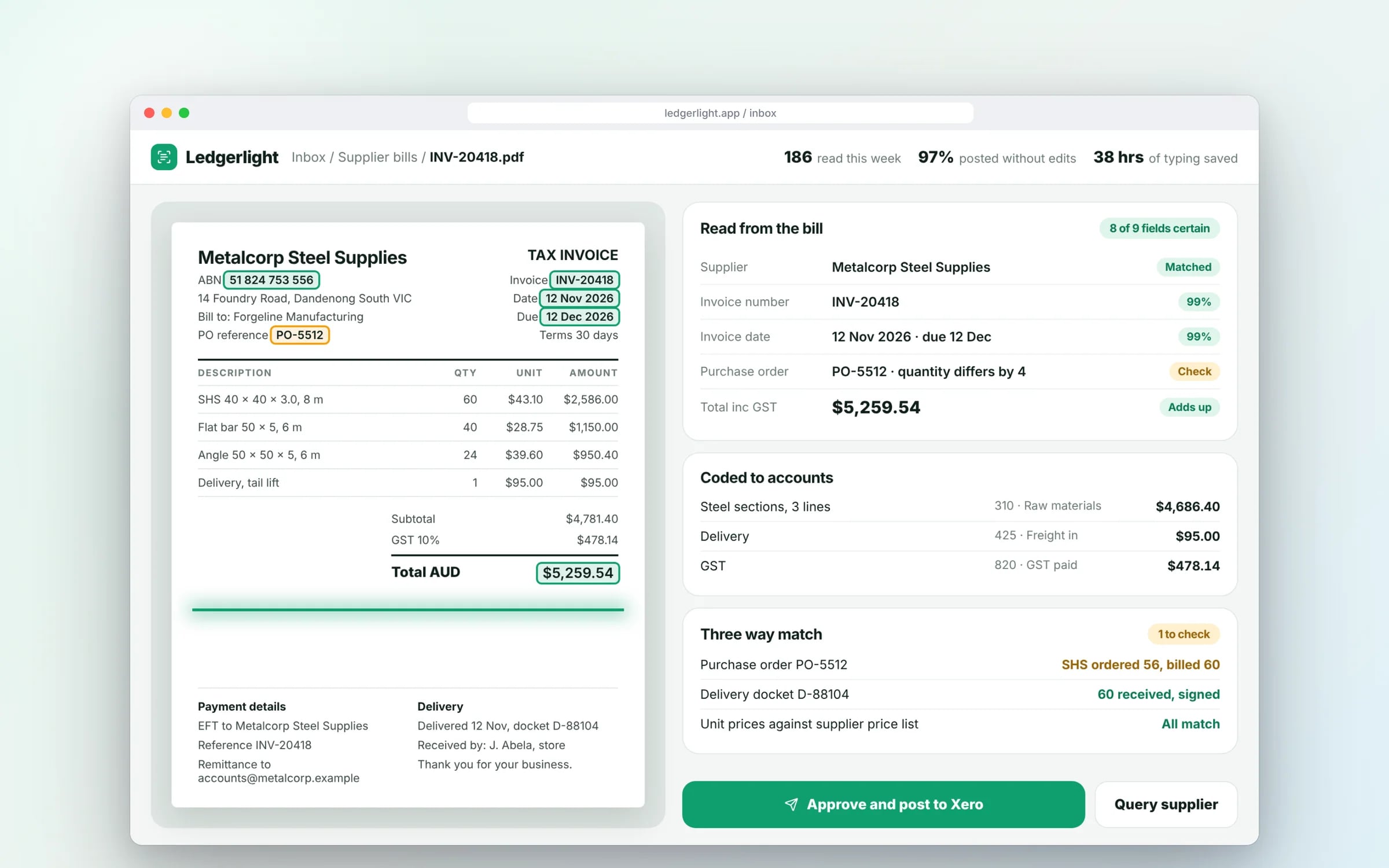
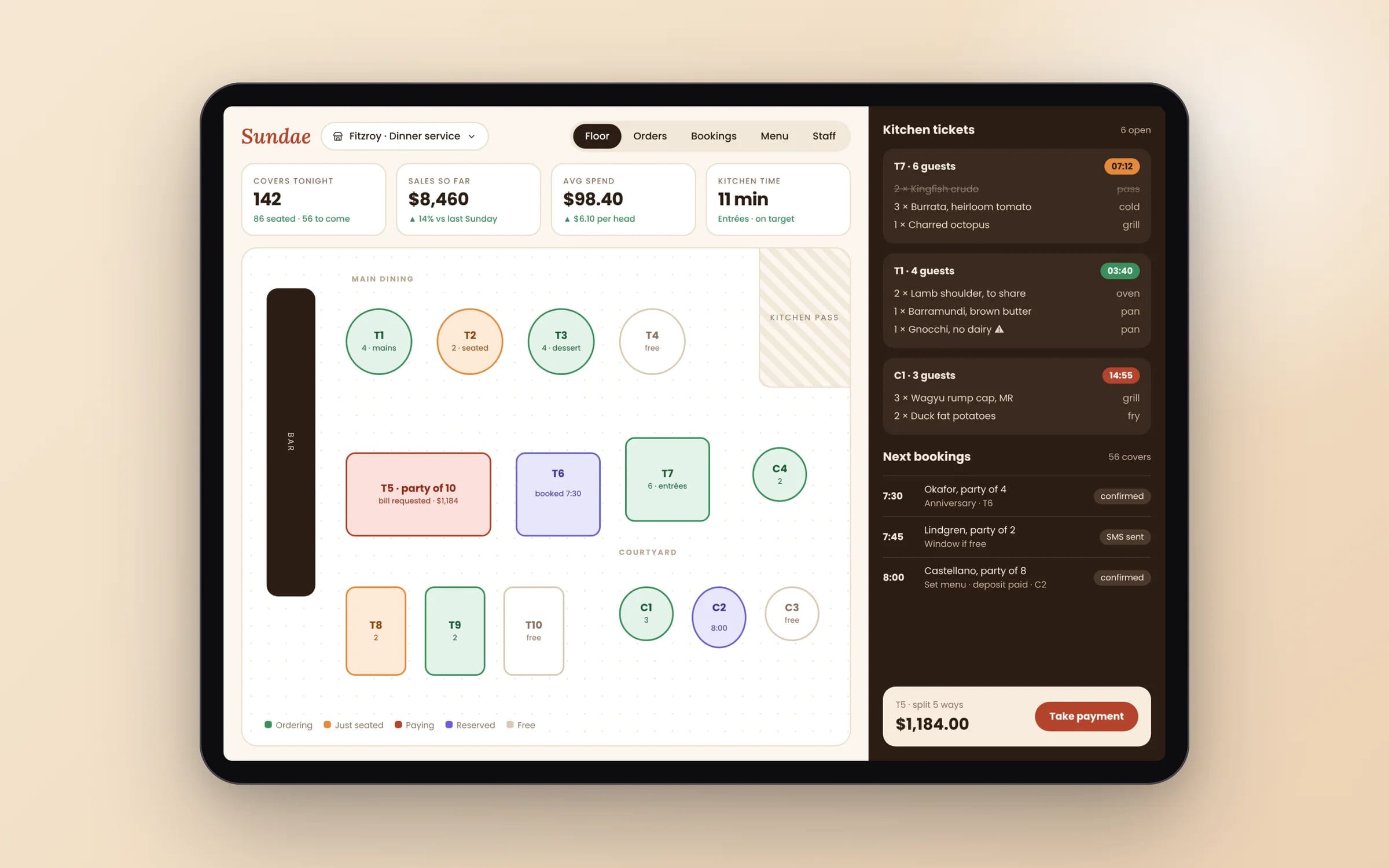
Example screens. The business names on them are invented.
★★★★★
“TJ helped me in creating a super creative user interface. I got the results that I wanted.”
Five years of renting, against owning. The gap is the point.
You probably need this when
- 01We've proved people want this and now it needs to be a real product.
- 02The first version was built fast and every new feature breaks something else.
- 03We've had three different contractors and nobody understands the whole thing.
- 04Customers keep asking for features the current build can't support.
- 05We want to sell the tool we built for ourselves to other businesses in our trade.
What you walk away with.
- 01A production ready application, tested and deployed
- 02Design files and a component library for future work
- 03Documentation handed to your team or ours to maintain
What is Product Development?
Product development is the full build of a software product, from first spec through design, engineering, testing and launch, carried by one team so nothing is lost between handoffs.
It suits businesses turning a validated idea into something they can sell, rebuilding a product that has outgrown its first version, or launching a new product line inside an existing business.
Reviewed by the Hypex team, Port Melbourne
Questions owners ask.
What is the difference between product development and building an MVP?
An MVP is the smallest version built to test whether an idea works; product development is the full build of something customers pay for and rely on every day. A product needs what an MVP can skip: proper user roles and permissions, billing, error handling, audit logs, support tooling, onboarding, backups, monitoring and documentation. Many products start as an MVP and move into product development once the evidence is in. If you already have paying users or a signed customer waiting, you are usually past the MVP stage.
How do I turn a software idea into a product people will pay for?
Start by writing down who pays, what job the product does for them and what they use today instead, then build the part that does that job and put it in front of real buyers. From there the order is: confirm the problem in conversations with buyers, map the system and its stages, build the part that delivers the most value first, release to a small group, and expand based on what they do. Skipping the early conversations is the most common way products get built that nobody buys.
Who owns the intellectual property when an agency builds my product?
You should own it outright, and the contract should say so plainly: source code, designs, data and any IP created during the build assigned to your business. With Hypex the client owns the source code, data and IP, and the product runs in a cloud account your business owns, so you hold the keys from day one. Check any agency contract for licence-back clauses, code kept in the agency's own repositories, or hosting in their account, as each makes it harder to move later.
Can an existing product be rebuilt without disrupting customers?
Yes: rebuild it in stages and run the new version alongside the old one until the results match, then move customers across in groups. Start with the part costing the most hours or causing the most support requests, rebuild it against the same data, and compare outputs on real work. Once a stage proves itself, its history moves across and that part of the old product is retired. Customers see a series of improvements instead of one risky cutover weekend.
What should be handed over when a software product is finished?
At handover you should receive everything another team needs to run and change the product without you: the full source code in a repository you own, the cloud account and its access, the database, design files and component library, deployment instructions, and documentation of the architecture and integrations. Ask for a list of every third-party service the product depends on, with the account owner for each. If any of these still sit with the developer, the handover is not finished.
How is a software product tested before launch?
A product should be tested throughout the build, with automated tests on the business rules, a review of every change before it is merged, and real users working through it before launch. The rules that cost money when wrong, such as pricing, invoicing, permissions and stock movements, get the most coverage. At Hypex changes are reviewed and logged, and new systems run on real work beside the existing process until the numbers match. That parallel run catches problems a written test plan misses.
What moves the cost and the timeline.
After a 30-minute call you get a system map with a fixed price for each stage, before any work starts. These are the things that shape it.
- Number of user types and how differently each one uses the product
- Billing, subscription and payment logic
- Integrations with accounting, payroll, maps or messaging services
- Whether an existing product and its data must be migrated
- How much design work the core flows need before build
Built for businesses like yours
Show us how you run it today.
Thirty minutes with the people who would build it. We'll map where the hours go and tell you honestly whether custom software is worth it for you.