Dedicated Team. An embedded engineering team that scales with the roadmap.
An engineering team embedded in your business, scaling up or down with the roadmap without the overhead of building an internal team from scratch.

What you walk away with.
- 01Engineers embedded directly in your existing workflow
- 02A team sized up or down as the roadmap shifts
- 03Direct access to the people writing the code, no account layer
Five years of renting, against owning. The gap is the point.
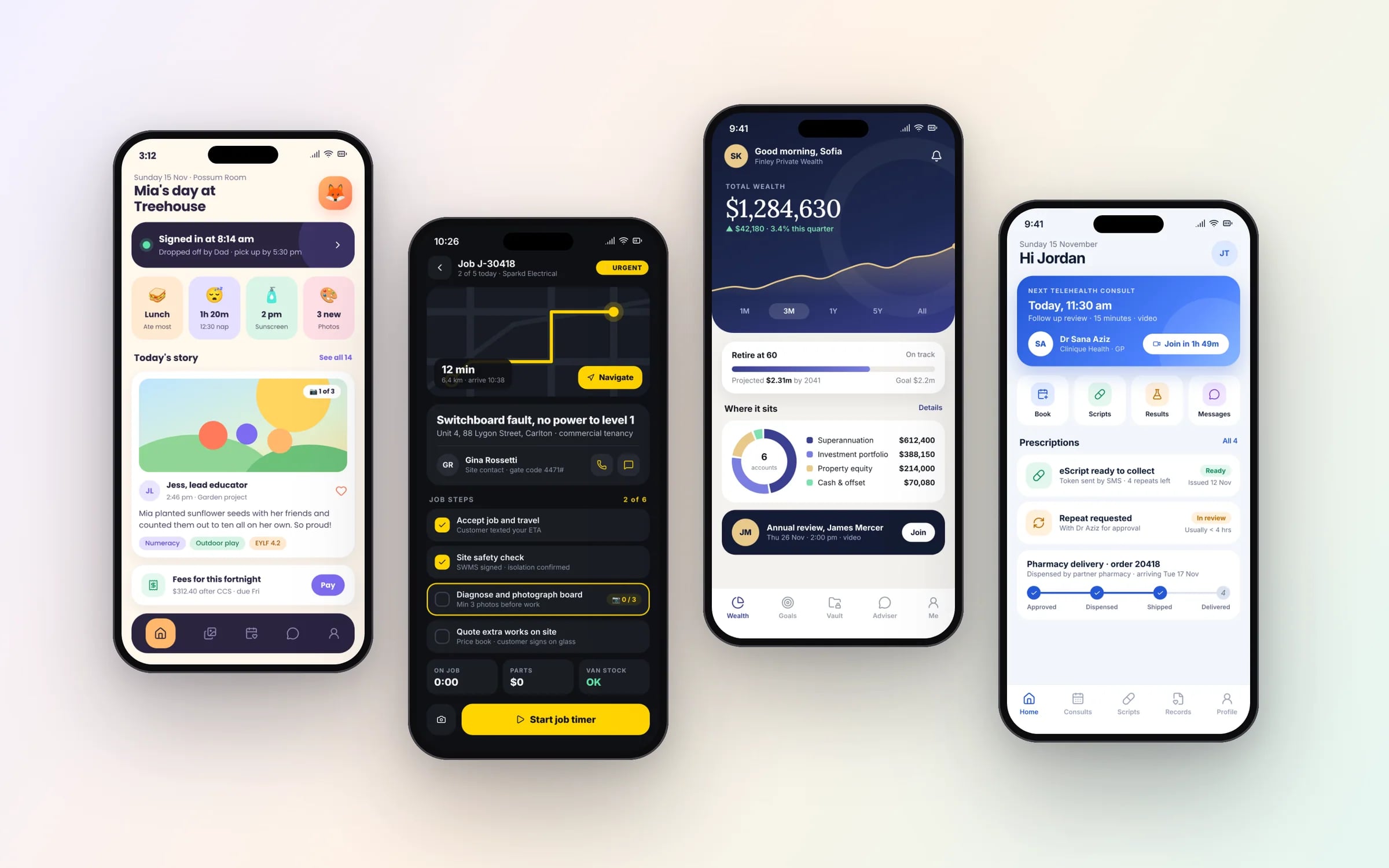
What it can look like. Screens from systems like this.
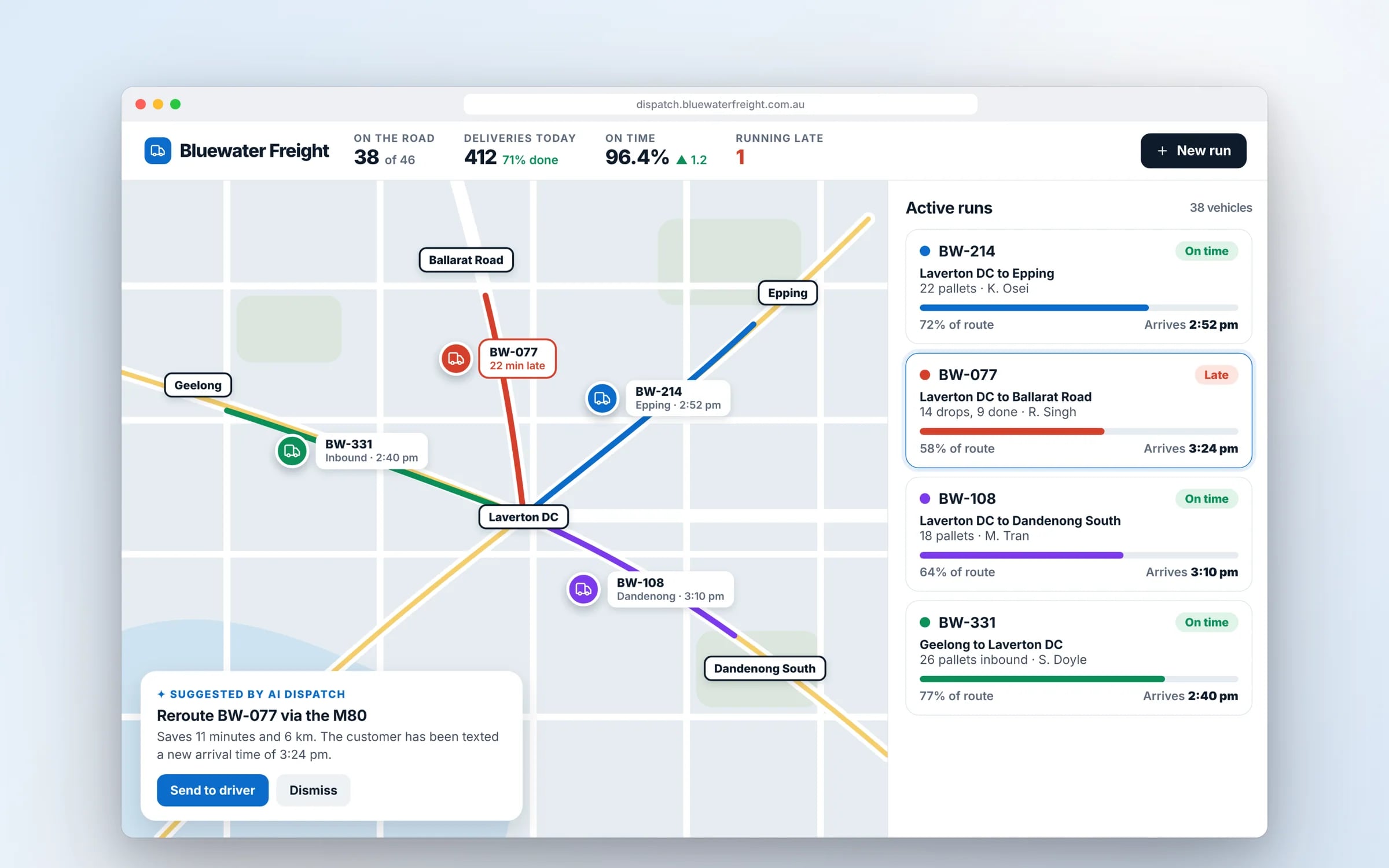
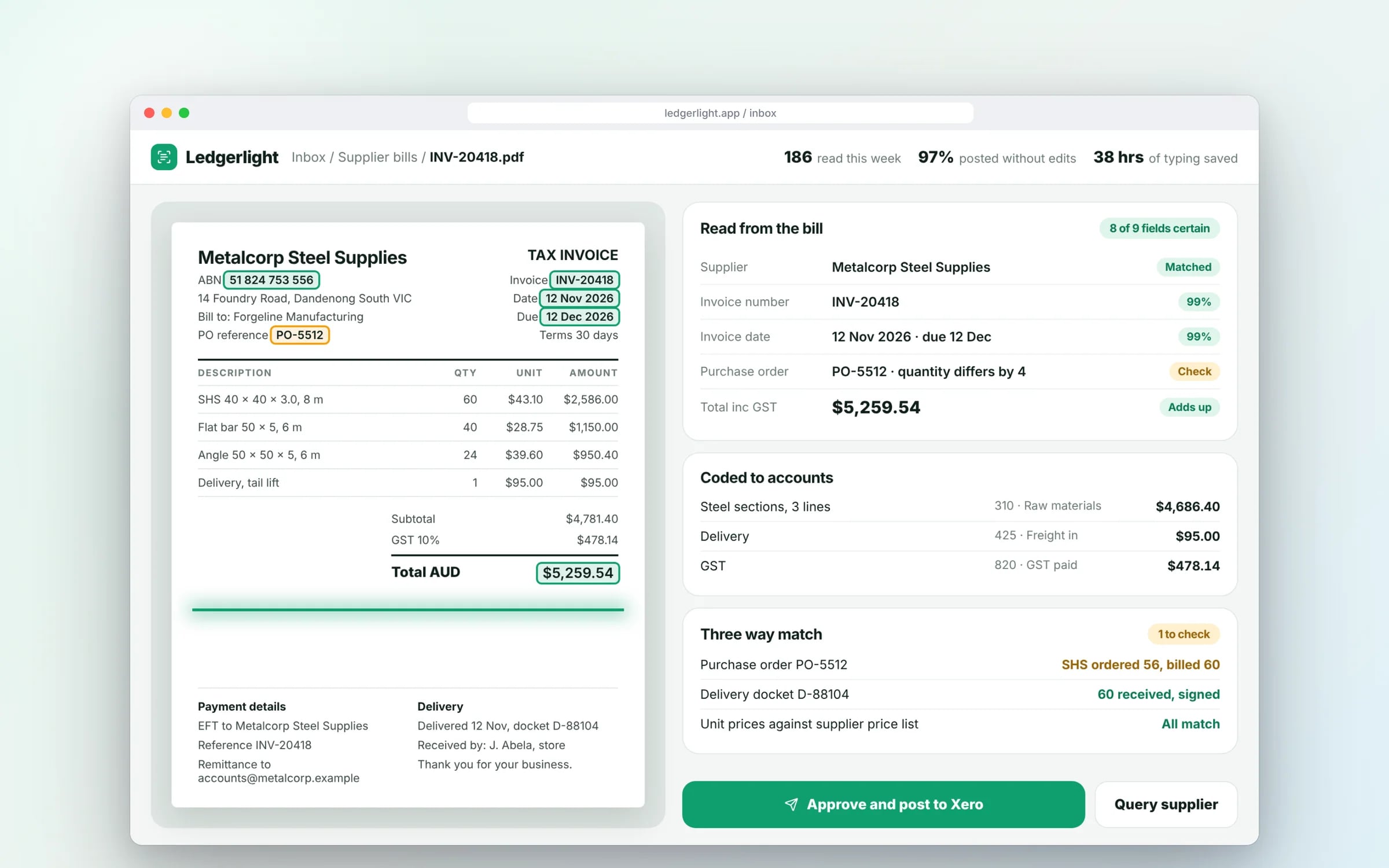
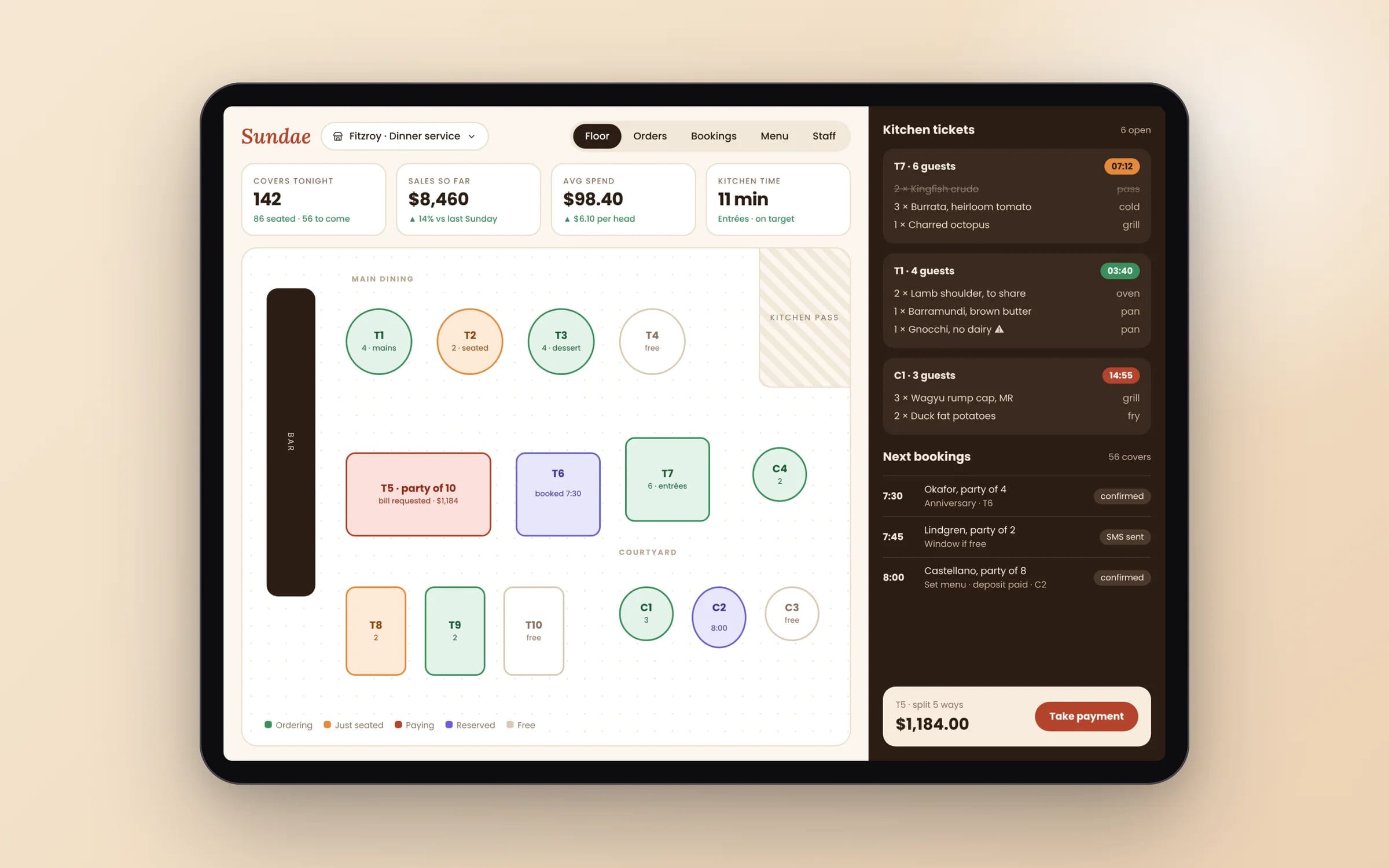
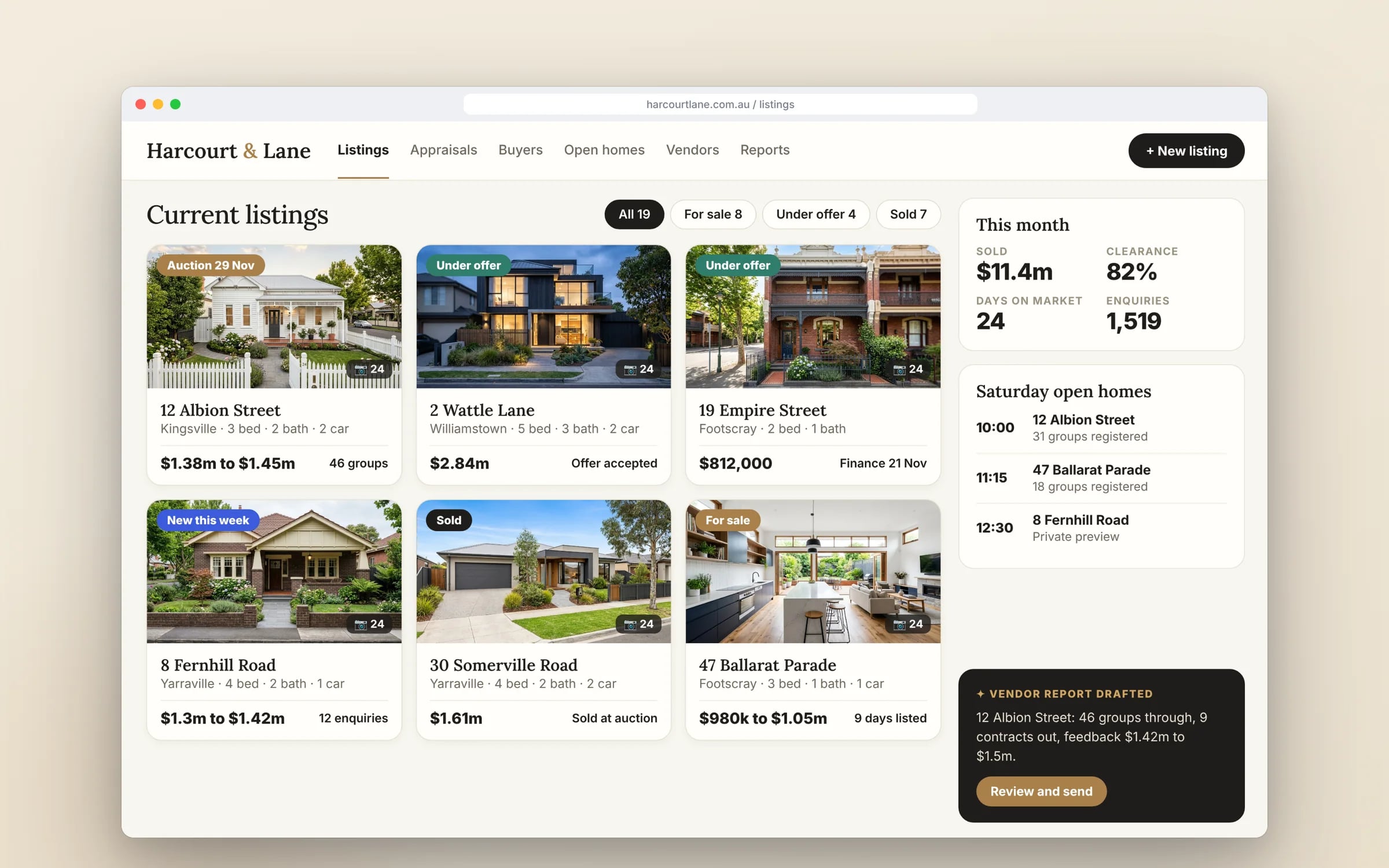
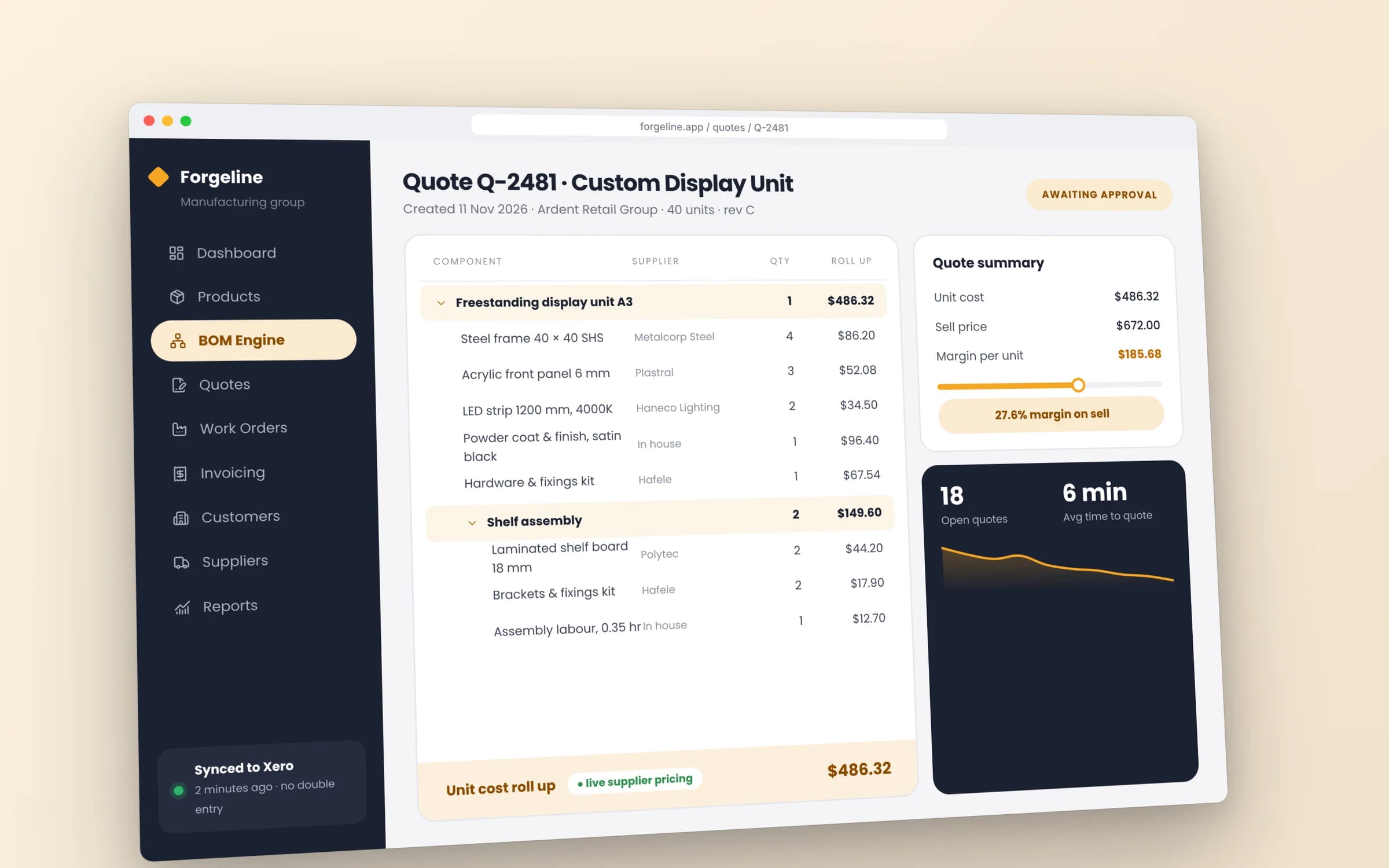
Example screens. The business names on them are invented.
You probably need this when
- 01Our backlog keeps growing and our one developer can't keep up.
- 02We've been trying to hire for months and the roadmap has stalled.
- 03We need extra capacity for a few months without adding a permanent salary.
- 04Our system was built by a contractor who's moved on, and nobody else knows it.
- 05We want to talk to the people writing the code, without an account manager in between.
★★★★★
“One of the BEST companies our business has worked with.”
What happens, in order.
1Discovery call
Thirty minutes on the roadmap, your current team and the tools you work in.
2Codebase and tools review
Access set up, the existing code read, and risks flagged before work starts.
3Join your routines
Engineers work from your backlog and join your stand-ups and planning in your tools.
4Adjust as the roadmap moves
Team size and focus reviewed as priorities change, with documentation kept current.
What is Dedicated Team?
A dedicated team is a group of Hypex engineers assigned to your roadmap, working inside your tools and routines, with direct access to the people writing the code.
It suits businesses with a growing backlog that need extra engineering capacity for a roadmap push or while hiring, without building an internal team from scratch. All work stays in house.
Reviewed by the Hypex team, Port Melbourne
Questions owners ask.
What is the difference between a dedicated team and a fixed price project?
A fixed price project delivers an agreed scope for an agreed price, while a dedicated team gives you engineering capacity that you direct as priorities change. Fixed price suits a defined build, such as a new system with a clear map. A dedicated team suits ongoing work, where the backlog shifts week to week and you want the same engineers carrying context from one feature to the next. A common pattern is a fixed price build first, then a dedicated arrangement once the system is live.
Is it cheaper to hire a developer in house or use a dedicated team?
It depends on how steady the work is: a full time hire suits a permanent, predictable workload, while a dedicated team suits work that rises and falls or needs skills one person rarely has. A single hire also brings recruitment time, leave cover, equipment and the risk that all the knowledge sits with one person. A dedicated team covers front end, back end and infrastructure between them. Compare the full cost over a year, including the months spent recruiting and the work that waits in the meantime.
How do I manage an external development team day to day?
Manage an external team the way you would your own: a shared backlog, a short regular check-in, and clear priorities from one person on your side. The engineers work in your existing tools, whether that is Jira, Slack, Teams or GitHub, and join your stand-ups or planning sessions. You talk directly to the people writing the code, with no account manager relaying messages. Every change is reviewed and logged, so you can see what was built and why.
Are Hypex engineers outsourced or offshore?
No, Hypex engineers are in house: Hypex Digital is a team of nine based in Port Melbourne, Victoria, and work is not outsourced. That matters in a dedicated arrangement because the people you meet are the people writing your code, they are in an Australian time zone, and context stays with the same engineers across the engagement. Source code, data and IP produced for you belong to your business, and the code lives in repositories and a cloud account your business owns.
How large can a dedicated team be, and how fast can it start?
A dedicated team from Hypex is a small group drawn from a team of nine, so it suits a focused roadmap better than a programme needing dozens of engineers. It can start once the first piece of work is scoped, beginning with a 30-minute discovery call and a look at your codebase and tools. Size is reviewed as the roadmap changes, so the team can grow or shrink with the work. Enquiries get a reply within one business day.
What happens to the knowledge when the engagement ends?
The knowledge stays with your business: code in your repositories, documentation of the architecture and the decisions behind it, and a handover for whoever takes over. Because the same engineers stay across the engagement, documentation is written as the work happens instead of rushed at the end. Changes are reviewed and logged, so the reasons behind each part of the system are on record. If you are hiring permanent staff, the team can overlap with them and hand work across gradually.
Dedicated team vs an in-house hire.
- Time to start
Dedicated teamStarts once the first piece of work is scoped
In-house hireStarts after recruitment and notice periods
- Skill coverage
Dedicated teamFront end, back end and infrastructure across the team
In-house hireLimited to what one or two people know
- Flexibility
Dedicated teamSized up or down as the roadmap changes
In-house hireFixed headcount; changing it means hiring or letting someone go
- Leave and turnover
Dedicated teamWork continues when one engineer is away
In-house hireWork slows or stops when the person is away or leaves
- Day to day direction
Dedicated teamYou set priorities; engineers work in your tools
In-house hireYou set priorities and manage the person directly
What moves the cost and the timeline.
After a 30-minute call you get a system map with a fixed price for each stage, before any work starts. These are the things that shape it.
- Number of engineers and the mix of skills needed
- Length of the engagement
- State of the existing codebase and its documentation
- How much infrastructure and DevOps work sits alongside feature work
Built for businesses like yours
Show us how you run it today.
Thirty minutes with the people who would build it. We'll map where the hours go and tell you honestly whether custom software is worth it for you.